
Product Function
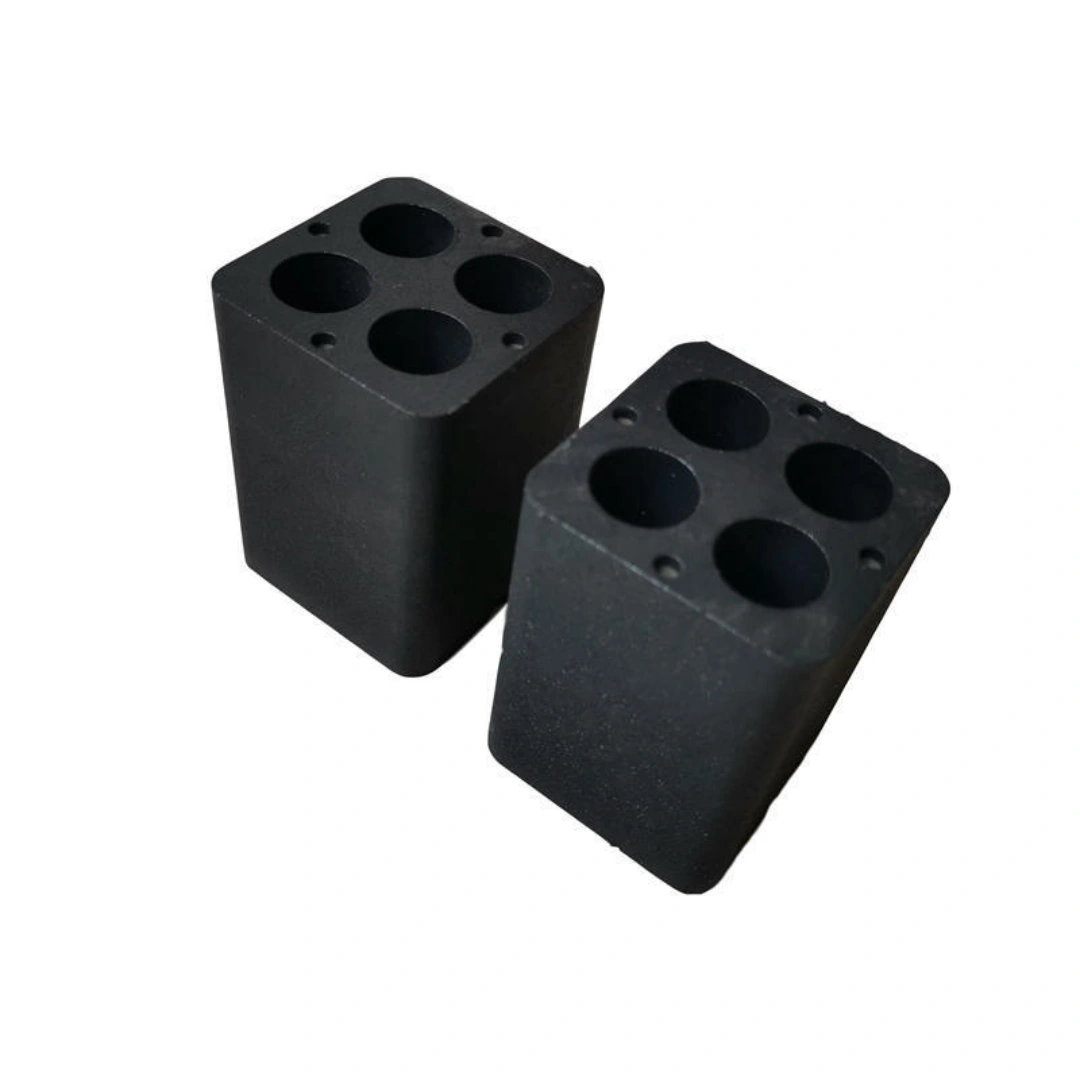
The Graphite Heating Block for Laboratory Digestion is a custom-machined graphite thermal-conductive component designed for laboratory sample pretreatment. As the core internal thermal member inside digester instruments, this Graphite Heating Block for Laboratory Digestion holds vertically inserted digestion tubes and provides stable heating through graphite’s excellent uniform-heat performance. Also known as a laboratory graphite heating block, it supports acid digestion pretreatment of soil, sediment, food, and mineral specimens. This Graphite Heating Block for Laboratory Digestion is widely used in environmental testing, food assay, and geological analysis laboratories. When exposed to acidic volatile gases at elevated temperatures, good ventilation is required to reduce erosion of the graphite base.
Structural Forms
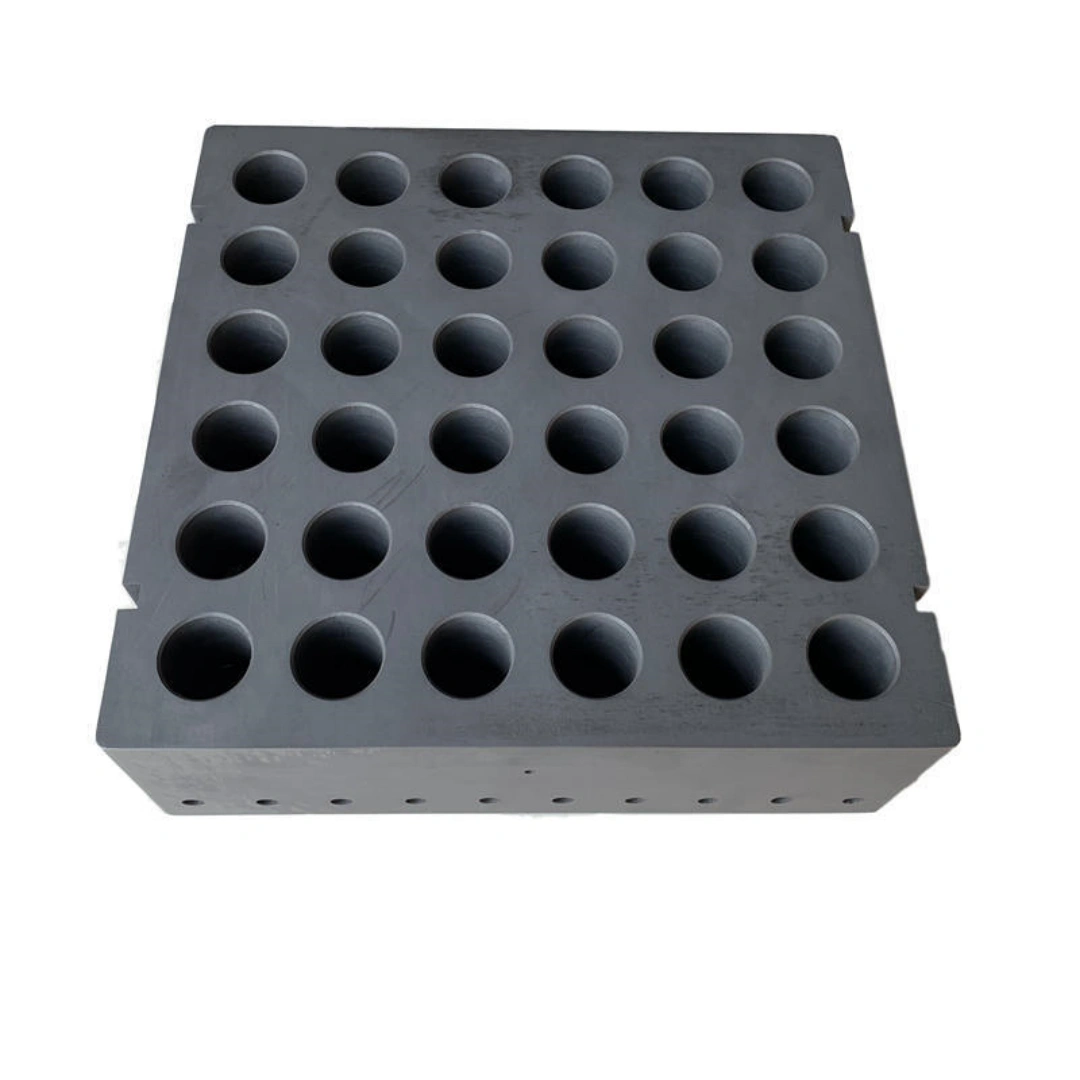
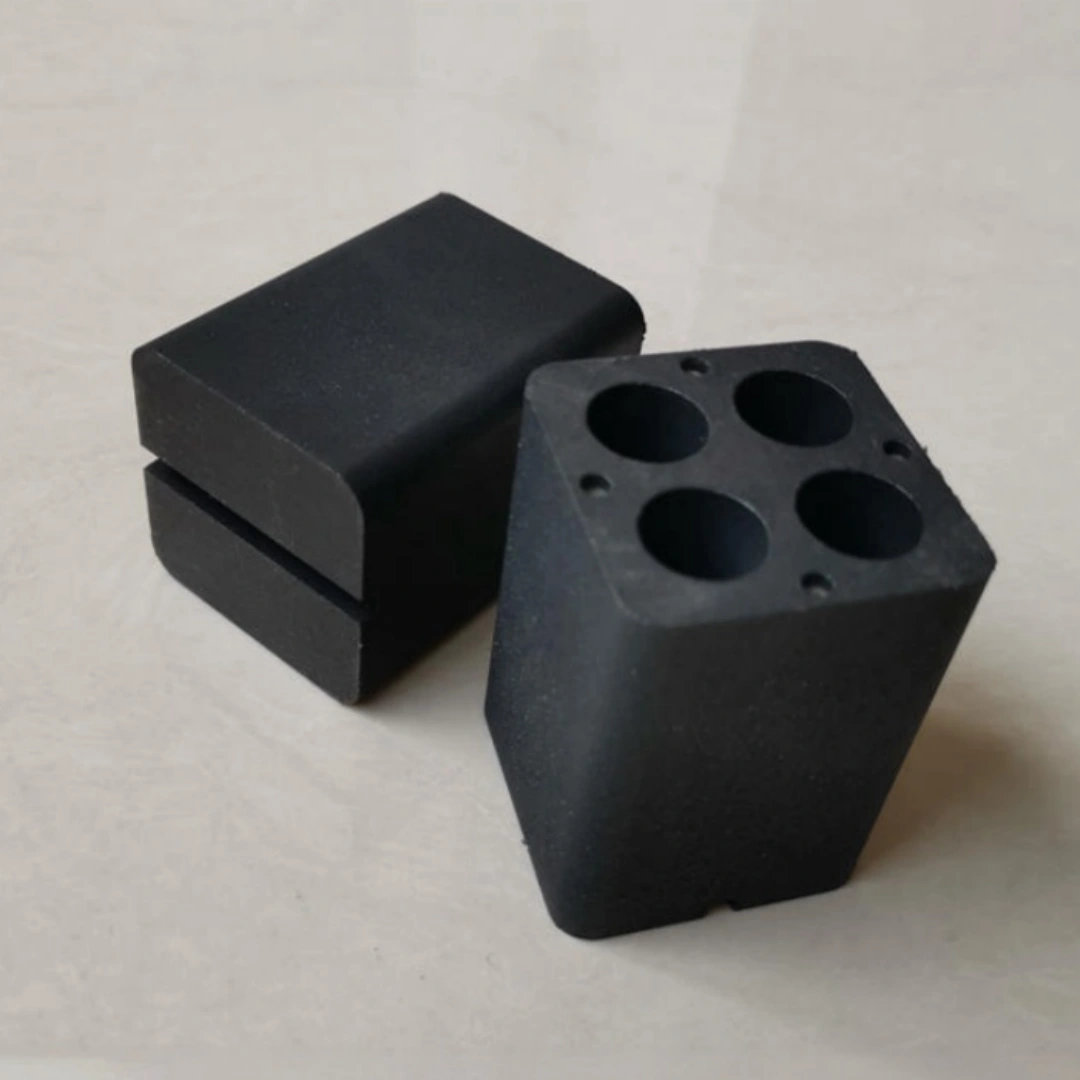
The graphite digestion heating block is a solid monolithic block with precision-machined circular holes arranged in a matrix on the plate surface. The depth and diameter of the holes match the corresponding digestion test tubes. This graphite block for sample digestion can be manufactured with single-row or multi-row matrix hole layouts. Main standard station specifications include 12-hole, 24-hole, 36-hole, and 48-hole versions. It can be fabricated from fine-grained moulded graphite or high-purity isostatic graphite. For certain working conditions, the surface receives PTFE impregnation for anti-corrosion treatment. Non-standard layouts and overall dimensions can be machined according to customer equipment drawings.
Product Features
-
Excellent thermal conductivity with small temperature deviation between holes. Thanks to the favourable heat conduction of graphite, heat distributes evenly across the whole base. Temperature variation among individual digestion holes is kept low, ensuring consistent heating for multiple test tubes within one batch and guaranteeing the reproducibility of parallel experimental data.
-
High-temperature resistance and stable long-term constant-temperature heating. It is capable of sustaining prolonged medium-temperature heating, which suits long-term constant-temperature reflux pretreatment in wet acid digestion with limited temperature fluctuation.
-
Anti-corrosion performance available via impregnation treatment. PTFE surface impregnation seals graphite pores and reduces penetration and corrosion caused by acidic volatile fumes such as nitric acid and hydrochloric acid, extending the service life of the block.
-
High flexibility for non-standard customisation. Overall outer dimensions can be tailored to the digester housing and heating-base size. Hole diameter, hole depth, and hole spacing are machined to match test-tube specifications for compatibility with different brands of digestion equipment.
Product Limitations
-
Graphite bases without anti-corrosion impregnation will gradually corrode and develop enlarged pores under long-term exposure to hot acidic vapour. The impregnated anti-corrosion version is recommended for strong-acid digestion applications.
-
Graphite is brittle. Knocking or dropping during assembly and disassembly must be avoided, as edge chipping is likely to occur upon impact.
-
After repeated thermal cycling over a long period, the anti-corrosion impregnated layer will gradually degrade. It is an internally consumable spare part of the equipment and requires periodic inspection.
-
Sharp thermal shock is forbidden. Direct cold water pouring onto a hot block will easily cause cracking.
Core Performance Specifications
-
Grain-size specification of raw material: Fine-grained (0.7–1.2 μm) for routine environmental laboratory testing; ultra-fine-grained (≤0.6 μm) is preferred for high-precision parallel tests. Finer grains deliver smoother inner surfaces of machined holes.
-
Resistivity: 8–15 μΩ·m. Uniform thermal conduction helps minimise temperature differences between holes and ensures consistent heating of multiple samples during batch digestion.
Material Selection & Operational Notes
-
Raw-material selection. For routine digestion of soil and general specimens, fine-grained moulded graphite (multiple impregnation and baking) with subsequent PTFE pore-sealing impregnation offers good cost-performance. For high-precision trace-element analysis laboratories, isostatic high-purity graphite substrate with anti-corrosion impregnation is preferred, delivering homogeneous material structure and superior stability of the thermal field. Extruded graphite shows significant directional discrepancy in thermal conduction, resulting in hard-to-control temperature differences between holes; therefore it is not suitable for manufacturing graphite digestion blocks.
-
Purity requirements. For laboratories conducting trace heavy-metal analysis, low-ash graphite blanks must be adopted prior to anti-corrosion impregnation. This prevents gradual leaching of impurities out of the graphite substrate, which would otherwise contaminate digested samples and distort test results. Standard high-purity graphite is acceptable for general routine laboratory analysis.
-
Working-condition adaptation. For digestion with strongly oxidising acid systems (nitric-hydrofluoric acid), the PTFE-impregnated anti-corrosion graphite block is mandatory to slow down acid-induced graphite erosion. The laboratory ventilation system shall remain switched on during testing.
-
Assembly requirements. The bottom face of the graphite block shall sit flat against the equipment heating base to guarantee even bottom-side heating. Suspended local support must be avoided to prevent overheating-induced cracking. Do not forcefully tap down digestion tubes after inserting them into holes.
-
Machining requirements. Inner walls of all digestion holes shall be precision-machined to guarantee consistent aperture and hole-depth dimensions. Slight chamfering at hole inlets facilitates insertion and removal of digestion test tubes. Rounded transitions are applied to block edges and corners to mitigate chipping damage during assembly and disassembly.
Reviews
There are no reviews yet.