I. Product Functions
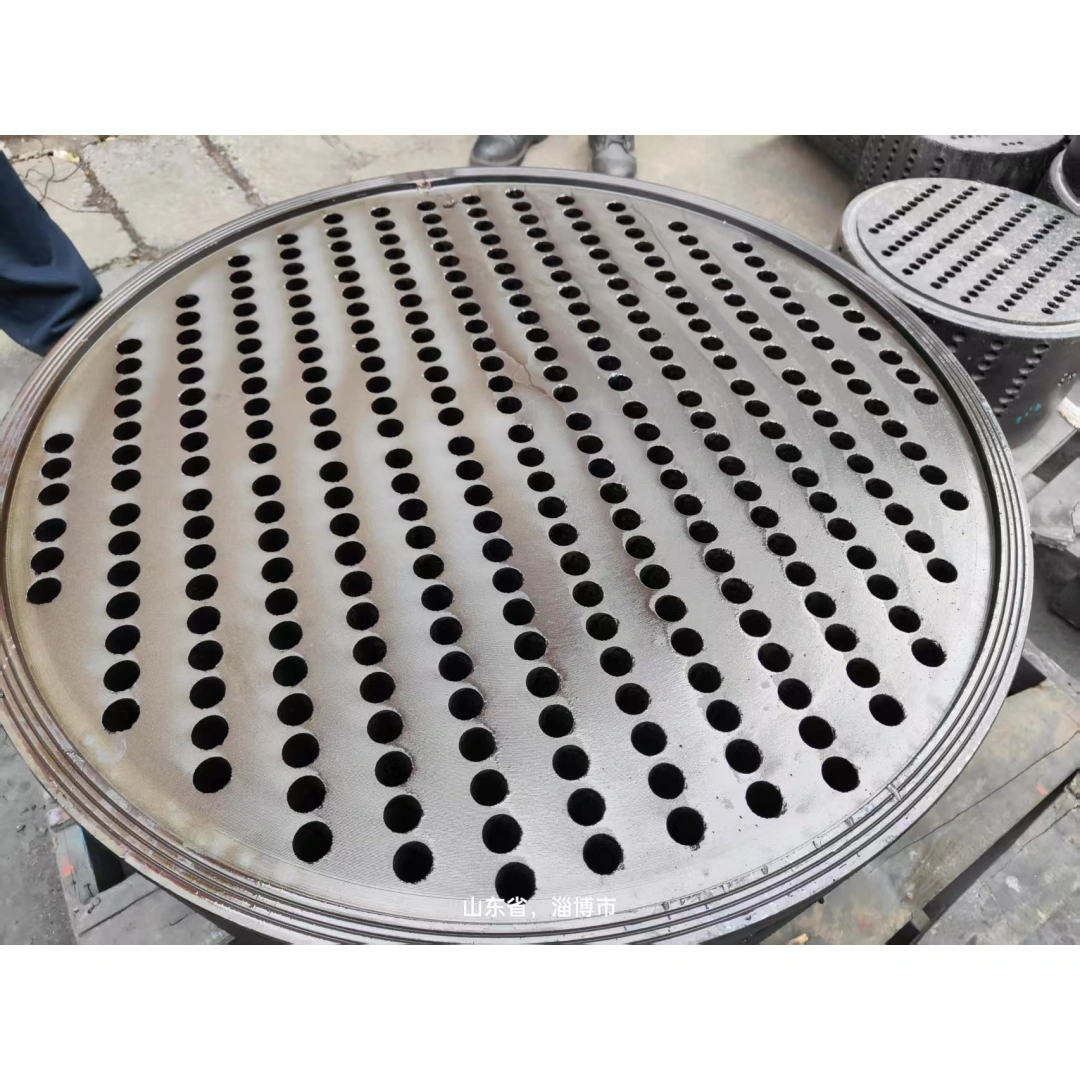
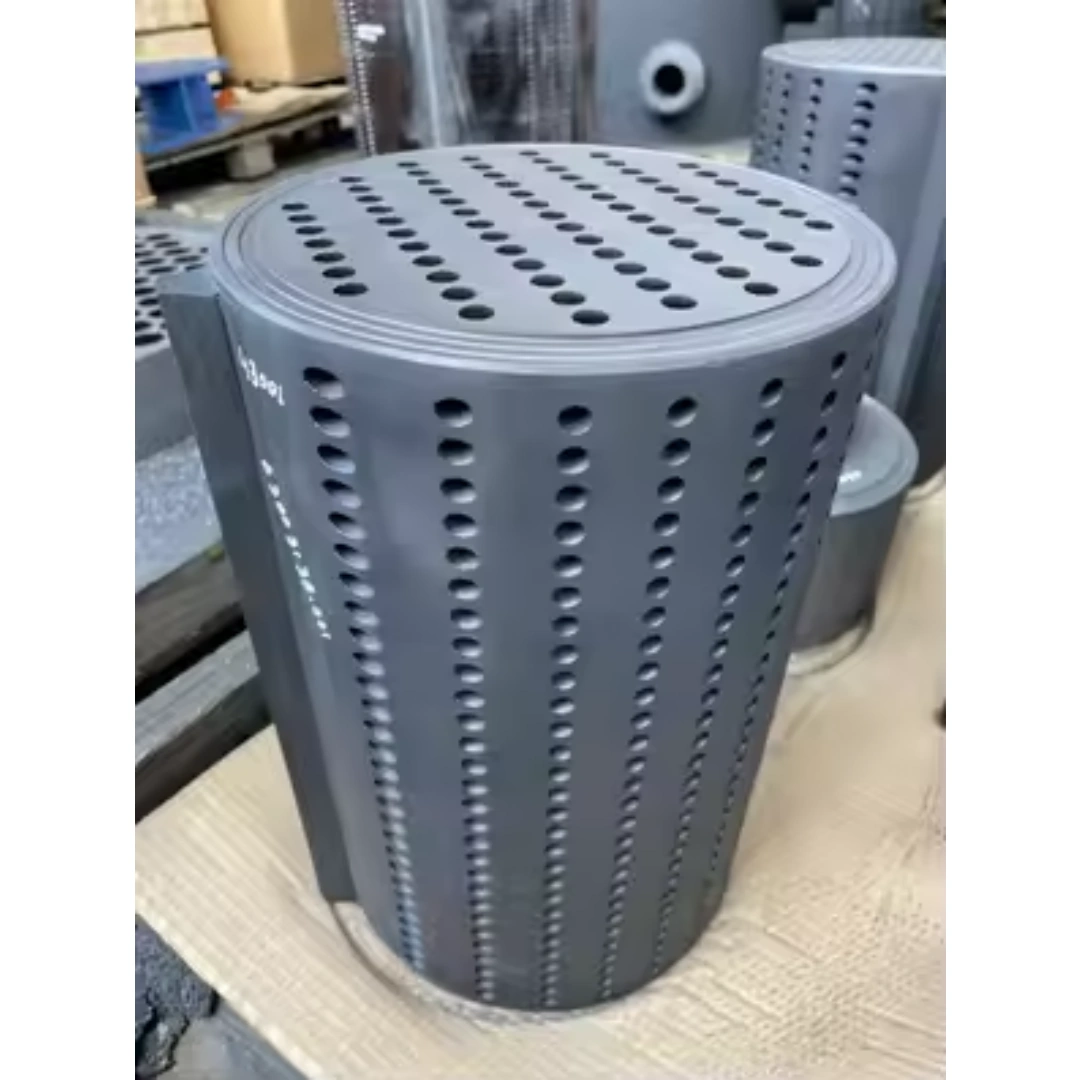
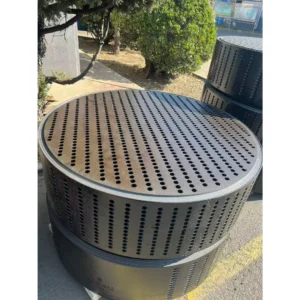
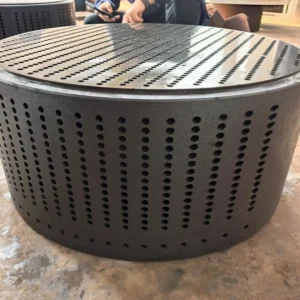
A graphite block for graphite heat exchanger repair is the core main spare part of YKB/YKA cylindrical block hole type graphite heat exchangers. It is specially customized for equipment repair, damage replacement, and technical transformation of old equipment. When equipment under long-term corrosive conditions experiences graphite block cracking, flow channel damage, medium penetration, or heat exchange failure, there is no need to replace the entire heat exchanger. Replacing only the damaged graphite block for graphite heat exchanger repair can restore normal operation of the equipment, greatly reducing equipment maintenance costs and downtime losses for chemical enterprises. It is widely suitable for heat exchanger maintenance and heat exchange use in fine chemicals, waste acid recovery, metallurgical chemical, pharmaceutical chemical, and other corrosive conditions.
II. Structural Forms
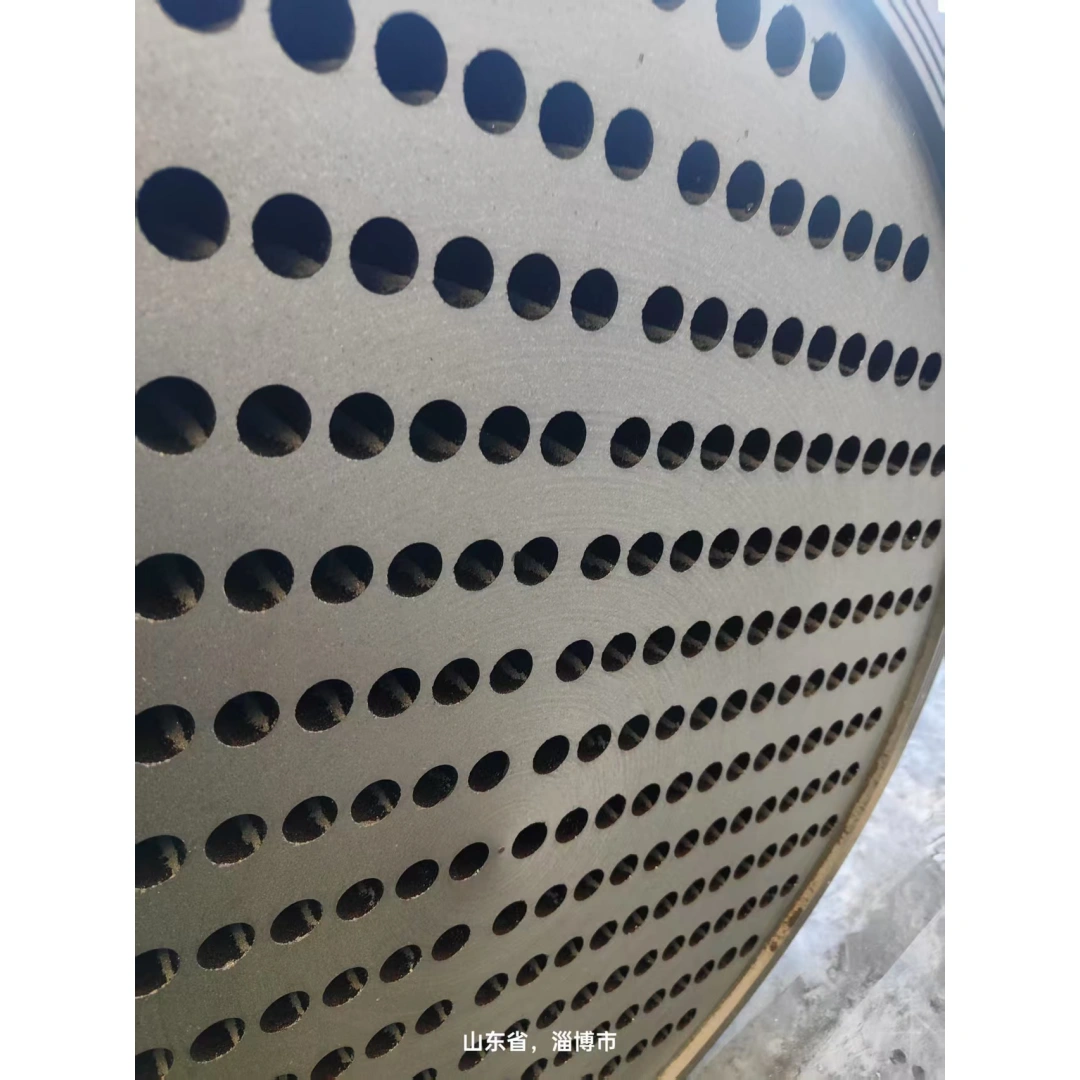
Integral cylindrical one-piece graphite structure. Inside the block, two sets of vertical, independent, and completely isolated cross heat exchange flow channels are machined. The media are clearly separated and do not mix, fully matching the standard cylindrical block hole heat exchanger stacking assembly structure. This product focuses on customized repair and replacement processing, not limited to standard specifications, and can adapt to various new, old, and non-standard graphite heat exchanger equipment.
Core processing service modes: support customer drawing customized processing, old part physical mapping and replication processing; also undertake graphite part impregnation and heat treatment outsourcing services, and can perform impermeability strengthening treatment on customer’s self-made graphite blanks.
III. Product Features
-
On-demand customization, 1:1 in-situ replacement: Supports full-size non-standard customization. It can be precision-machined strictly according to customer equipment drawings, or reverse-replicated based on physical mapping of damaged old parts. Flow channel hole diameter, hole spacing, plane precision, and overall dimensions fully match the original equipment, with no need to modify the equipment structure, and direct in-situ assembly and use.
-
Dual-process impregnation treatment, adaptable to multiple working conditions: Can provide two anti-corrosion strengthening processes: phenolic resin impregnation and furan resin impregnation, with professional heat treatment shaping. Effectively seals graphite pores, improves density, penetration resistance, and structural stability, adapting to industrial conditions with different temperatures and corrosive media.
-
Professional outsourcing services: For customer’s self-processed graphite blanks, can separately provide impregnation process + heat treatment outsourcing services, helping customers quickly complete spare part finalization processing and reducing outsourcing procurement costs.
-
Greatly reduce equipment maintenance costs: Adopts the “replace block, not whole machine” maintenance solution, retaining the original equipment shell, frame, heads, and sealing structure, and only replacing the failed graphite heat exchange core component. This greatly saves equipment replacement costs and shortens on-site downtime maintenance cycles.
-
Precision plane processing, stable sealing performance: Upper and lower sealing end faces are precision ground, with high flatness and tight stacking fit, adapting to the original equipment sealing components. After repair, there is no leakage or liquid cross-mixing hazard, restoring the original heat exchange performance of the equipment.
-
Supports ASME standard processing and customization: Can be processed and produced according to ASME process standards, meeting the high-standard acceptance requirements of foreign trade projects and overseas chemical equipment maintenance.
-
Complete quality inspection documents deliverable: Can provide raw material quality certificates, processing inspection records, impregnation process documents, non-destructive testing reports, and other full sets of documents, facilitating enterprise equipment archiving and engineering inspection.
-
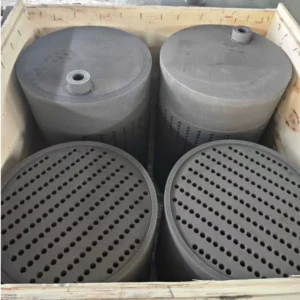
Professional shock-proof reinforced packaging: Uses metal frame protection + solid wood pallet shock-proof packaging, avoiding collision, edge chipping, and cracking of graphite blocks during transportation, ensuring spare parts arrive intact and can be directly assembled on the machine.
Product Limitations
-
Graphite material itself is brittle. Edges, corners, and hole openings are prone to chipping. During disassembly, handling, and stacking, avoid knocking, impact, and unilateral force.
-
Not suitable for strong oxidants, high-temperature molten strong alkali extreme conditions, which easily cause aging and failure of the impregnation layer.
-
During equipment repair and replacement, it is recommended to replace with new sealing gaskets at the same time. Reusing old gaskets easily causes secondary leakage.
IV. Core Performance Indicators
-
Material grain size: Can supply graphite blanks with grain size 0.7–1.2 mm; both compacted graphite and isostatic graphite are available. For conventional repair and replacement, compacted graphite is preferred; for high-temperature, high-pressure, and highly hazardous demanding conditions, isostatic graphite substrate can be selected, with more stable structure and stronger thermal shock resistance.
-
Resistivity: 8–15 μΩ·m. The material has uniform and stable thermal conductivity. After replacement, the overall heat exchange of the equipment is uniform, with stable performance and no attenuation.
-
Applicable working condition parameters: Conventional spare parts are suitable for design pressure ≤0.6 MPa, design temperature ≤220°C. High-temperature and high-pressure strengthened versions can be customized according to working conditions.
-
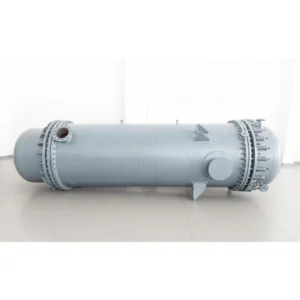
General adaptability: Can adapt to various graphite block heat exchangers and graphite heat exchangers with carbon steel, stainless steel, carbon steel lined with PP, carbon steel lined with PTFE, and other shell types. Strong versatility, suitable for maintenance of most domestic and imported old equipment.
V. Custom Processing and Maintenance Service Model
Focusing on graphite block for graphite heat exchanger repair custom processing and graphite part strengthening outsourcing, providing one-stop cost-reduction maintenance solutions:
-
Drawing customized processing: Customers provide equipment part drawings, dimension parameters, and process requirements. We complete precision machining, impregnation, heat treatment, and quality inspection delivery as a complete set, precisely matching equipment installation requirements.
-
Old part mapping and replication processing: Customers send damaged old graphite blocks. We perform precise physical mapping, reverse modeling and drawing, and 1:1 replication of original structure and dimensions, perfectly compatible with old equipment, solving the problem of no drawings and discontinued spare parts that are difficult to purchase.
-
Impregnation + heat treatment outsourcing: Undertake post-strengthening processes for customer-owned graphite blanks. Can perform phenolic impregnation, furan impregnation, and supporting heat treatment, processing ordinary graphite blanks into impermeable anti-corrosion heat exchange spare parts.
-
Equipment cost-reduction maintenance solution: Replace whole machine replacement with local spare part replacement maintenance, effectively reducing enterprise equipment procurement costs and reducing production line downtime. Suitable for long-term factory maintenance and batch spare parts stocking.
VI. Material Selection Standards and Precautions
-
Forming material selection: For conventional chemical corrosive condition repair and replacement of graphite block for graphite heat exchanger repair, compacted graphite is selected, with high cost performance and good stability. For high-temperature, high-pressure, and highly hazardous media conditions, isostatic high-purity graphite is preferred, with higher density, better thermal shock resistance, and penetration resistance. Loose extruded graphite is prohibited for making heat exchange block spare parts.
-
Impregnation process selection adaptation: For conventional acidic conditions, phenolic resin impregnation + heat treatment is selected, with stable anti-permeation and anti-corrosion performance. For high-temperature conditions, weakly alkaline media, and complex mixed corrosive conditions, furan resin impregnation process is selected, with stronger comprehensive temperature resistance, corrosion resistance, and alkali resistance.
-
Working condition adaptation requirements: For production equipment with frequent hot-cold cycles and large temperature fluctuations, high-density graphite substrate + high-quality impregnation process is preferred to reduce thermal stress cracking and leakage risks.
-
Assembly and replacement requirements: Before replacement, clean internal impurities of the equipment to ensure the fitting surface is clean and flat. Graphite blocks should be stacked centered and aligned, evenly compressed. Unilateral eccentric load is prohibited. Equipment startup should use gradient heating, and rapid cooling and heating shocks are prohibited.
-
Machining process requirements: Integral one-piece forming, cross flow channels precision drilled, hole walls smooth without chipping. Sealing end faces precision ground and leveled to ensure stacking sealing performance. Edges and corners have rounded transitions to reduce disassembly collision damage and stress concentration, adapting to long-term industrial continuous operation.
Please note! The replacement of graphite blocks for graphite heat exchangers is a highly rigorous and meticulous technical task, and the operation must be carried out in strict accordance with relevant operating procedures. If you find on-site construction difficult, we recommend replacing the entire unit. Please read the features and key selection points of graphite heat exchangers via this link.
Reviews
There are no reviews yet.