
Cubic Graphite Block Heat Exchanger (Corrosion-Resistant Chemical Cubic Block Hole Graphite Heat Exchange Equipment)
I. Product Functions
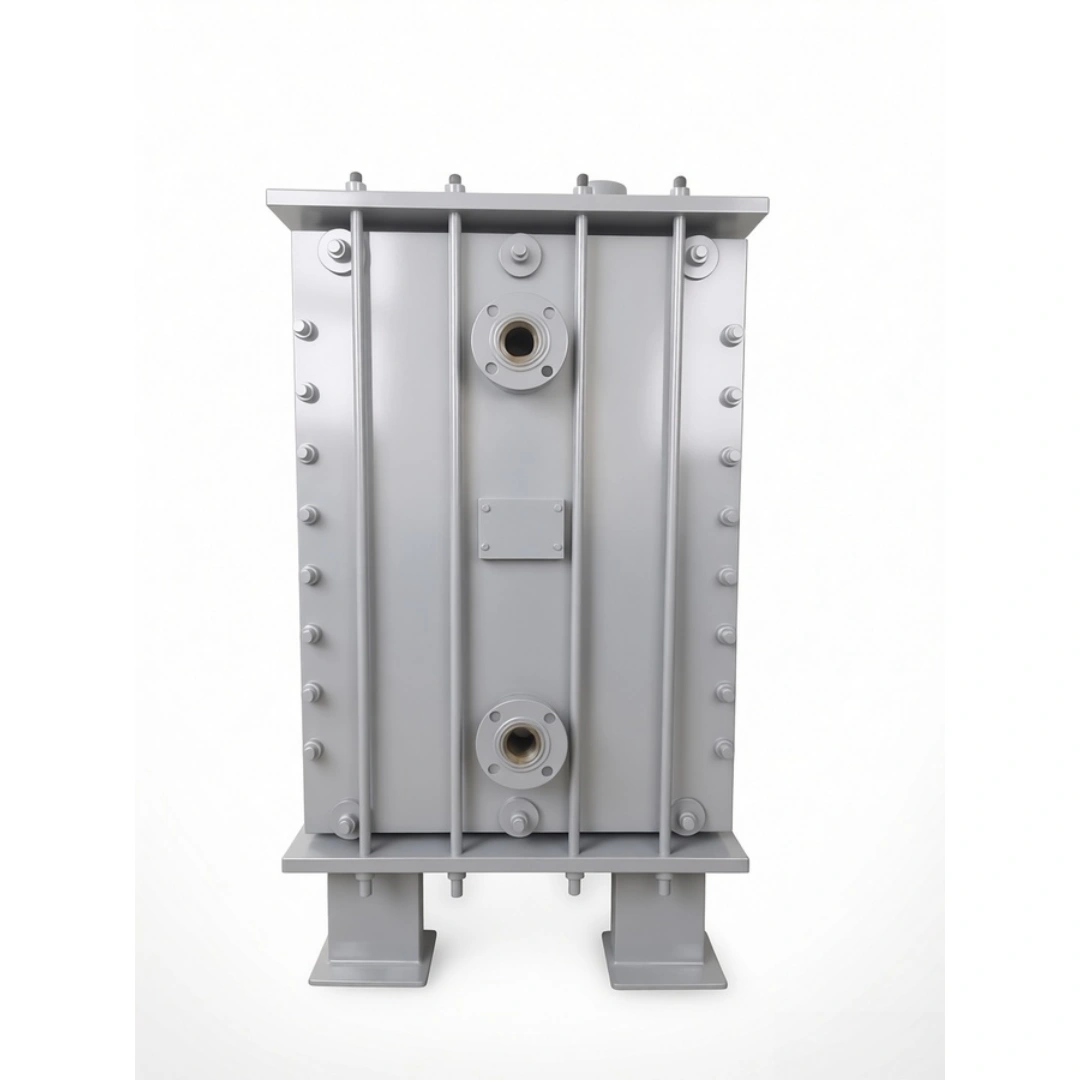
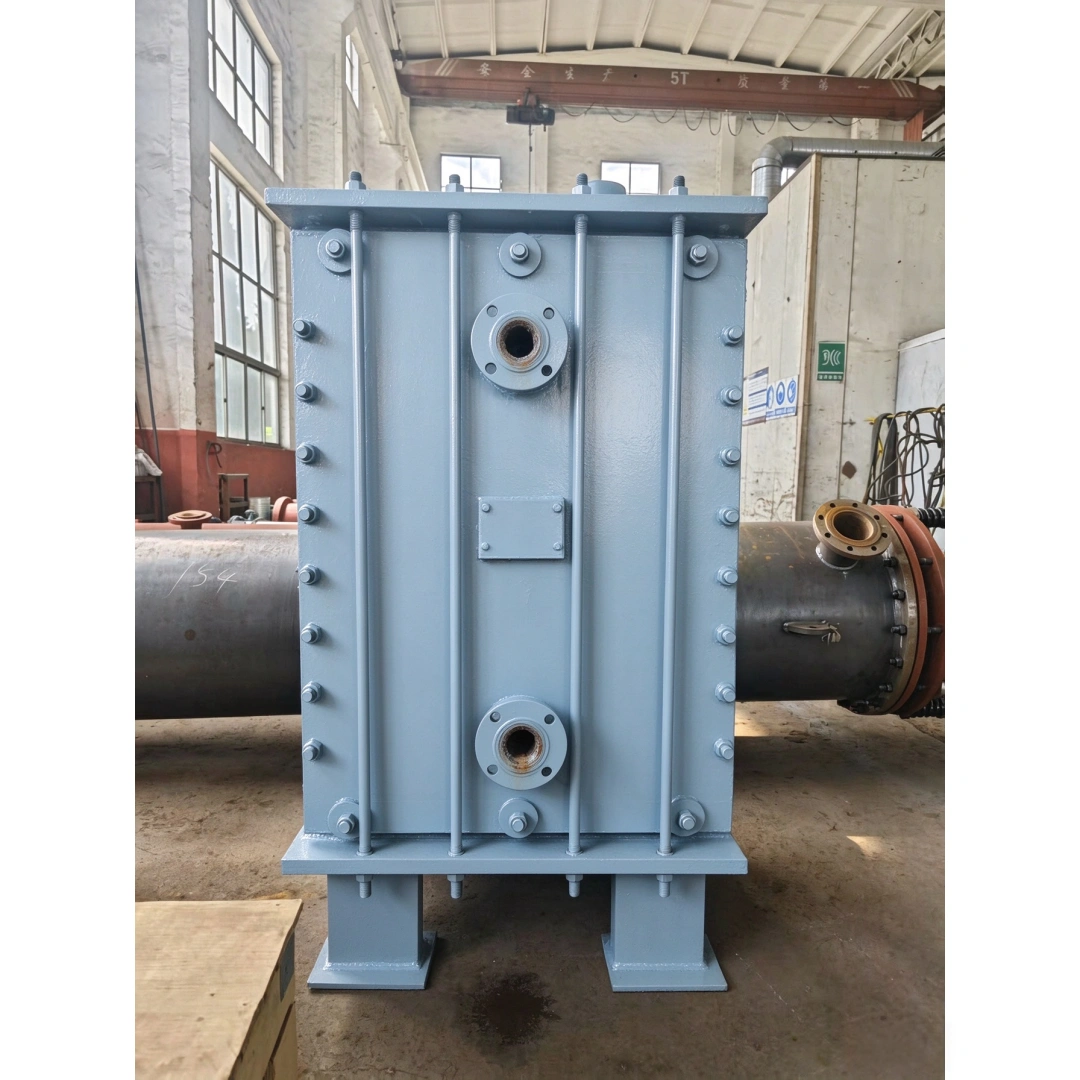
A cubic graphite block heat exchanger is a specialized impermeable block-type heat exchange device for strongly corrosive chemical working conditions. This cubic graphite block heat exchanger uses a square cubic graphite block stacked heat exchange structure and relies on a high-density impregnated graphite substrate to achieve efficient heat exchange between hot and cold media. As a cubic graphite block heat exchanger, it can perform multiple functions including heating, cooling, condensation, evaporation, solvent recovery, and hydrochloric acid absorption. It can also serve as a graphite condenser, graphite heater, or graphite evaporator.
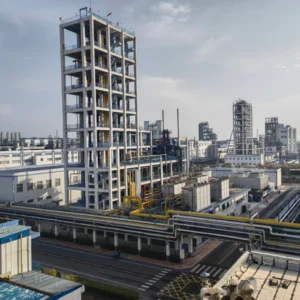
It is widely used in fine chemicals, pharmaceutical and pesticide, hydrometallurgy, waste acid treatment, pickling processes, corrosive salt solution heat exchange, and other highly corrosive scenarios. Compared with metal heat exchangers, it completely solves the pain points of stainless steel and titanium materials, such as poor resistance to strong acid corrosion, easy scaling, and rapid heat exchange attenuation. Compared with the cylindrical block hole structure, the cubic block has stronger overall rigidity, better pressure-bearing stability, and higher plane fitting precision. It is suitable for continuous production lines with stable working conditions and strict sealing requirements, and is a mainstream reliable device for industrial strong corrosive media heat exchange.
II. Structural Forms
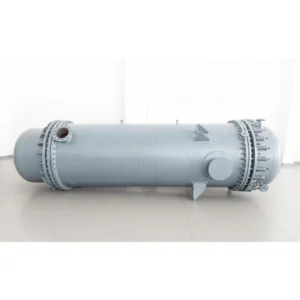
The cubic graphite block heat exchanger adopts an integral square cubic graphite block stacked modular structure. The main body consists of multiple sets of cubic graphite heat exchange blocks, sealing components, a metal fastening frame, and a side medium diversion shell, with no independent upper and lower head structure.
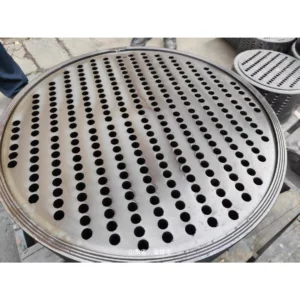
Inside the cubic graphite block, two sets of horizontal and vertical cross flow channels are machined, completely isolated from each other. One medium enters and exits from the side, and the other also enters and exits from the side. The process corrosive medium and the cooling-heating medium flow independently in separate zones without mixing, completing indirect heat exchange through the graphite wall thickness. The external metal frame applies axial compression to the stacked cubic graphite blocks to ensure sealing between blocks.
By increasing or decreasing the number of cubic graphite blocks, the heat exchange area can be flexibly adjusted to suit different processing capacities from laboratory and pilot tests to large-scale industrialization. The overall stack is uniformly stressed, with no local stress concentration, and outstanding thermal shock and leakage resistance.
The equipment supports full-condition non-standard customization: flow channel hole diameter, hole spacing, block size, and stacking layers can be customized according to medium characteristics, flow, temperature, and pressure parameters, perfectly adapting to the installation conditions of new and old production lines.
III. Product Features
1. Super corrosion resistance, suitable for full acid complex conditions: This heat exchanger is made of impermeable impregnated graphite material with extremely high chemical inertness. It can withstand long-term exposure to hydrochloric acid, dilute sulfuric acid, organic acids, corrosive salt solutions, organic solvents, and other strongly corrosive media. It has no rust, no electrochemical corrosion, and no material aging failure, adapting to various severe chemical corrosion conditions.
2. Strong cubic structure rigidity, more stable pressure-bearing sealing: The square block body is uniformly stressed, and its structural rigidity is better than that of a round block. The stacking fitting surface is flat and tight. After eliminating the upper and lower heads, all medium ports are arranged on the side of the equipment, making pipeline layout simpler. Under long-term high-temperature hot-cold cycling, it is not easy to shift or deform, and the leakage probability is lower, making it suitable for 24-hour continuous stable production.
3. Uniform and stable heat exchange, good process reproducibility: The graphite substrate has high thermal conductivity and a uniform thermal field. The cubic block has stable overall heat storage and small temperature fluctuation. The heat exchange efficiency of the entire equipment is balanced, ensuring stable batch production processes.
4. Not easy to scale or block, low operation and maintenance cost: The graphite surface is smooth and dense, does not stick to media, and has no adsorption. Under high-temperature corrosive conditions, it is not easy to scale, coke, or accumulate material. The flow channels are regular and smooth, making cleaning and maintenance convenient and greatly reducing downtime maintenance frequency and production costs.
5. Modular structure, convenient inspection and maintenance: It adopts a building-block stacking design. A single faulty graphite part can be individually inspected and replaced without scrapping the entire equipment. Strong parts interchangeability and high later-stage operation and maintenance cost performance.
6. Dual impregnation processes optional, adapting to multiple temperature zones: It supports phenolic resin impregnation and furan resin impregnation, combined with professional heat treatment shaping. It can adapt to normal temperature, medium temperature, weakly alkaline, complex mixed corrosion, and other different working conditions.
7. ASME standard design and manufacturing supported: Structural verification, process design, and production processing can be completed according to ASME pressure vessel design standards, meeting the high-standard acceptance requirements of foreign-related projects, export equipment, and high-end chemical engineering.
8. Full set of compliant documents available for traceable delivery: Factory delivery can be accompanied by raw material quality certificates, welding process documents, quality plans, hydrostatic test reports, non-destructive testing records, and other full sets of technical documents, meeting engineering inspection, audit archiving, and equipment filing needs.
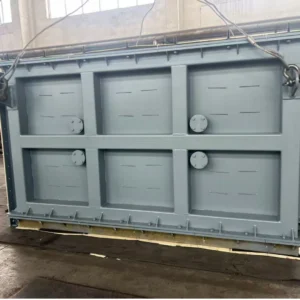
9. Professional reinforced shock-proof packaging: Metal frame protection + solid wood pallet shock absorption and buffering packaging are used to effectively avoid edge chipping and cracking caused by long-distance transportation bumps and impacts, ensuring the equipment arrives intact and can be directly installed and put into production.
Product Limitations
-
Graphite is a brittle material. The equipment must not be operated under overpressure, severe vibration, impact, or collision. During installation and handling, force must be uniform, avoiding unilateral eccentric load.
-
Not suitable for strong oxidants, high-temperature molten strong alkali extreme conditions, which will accelerate the aging and damage of the impregnated resin layer and reduce equipment service life.
-
Under long-term hot-cold cycling conditions, sealing gaskets are wearing parts and need regular inspection and replacement to prevent medium leakage.
-
Rapid cooling and heating of the equipment in a high-temperature state is strictly prohibited. Sharp temperature fluctuations easily cause stress cracking of graphite blocks.
IV. Core Performance Indicators
-
Material grain size: The full series provides 0.7–1.2 mm grain size graphite substrates, including compacted graphite and isostatic high-purity graphite. For conventional conditions, compacted graphite is selected with excellent cost performance. For high-temperature, high-pressure, and highly hazardous demanding conditions, isostatic graphite is selected, with higher density and stronger thermal shock resistance and penetration resistance.
-
Resistivity: 8–15 μΩ·m. The material has uniform and stable thermal conductivity, high thermal field consistency of the whole block, and no local overheating or uneven heat exchange, ensuring long-term efficient and stable operation of the equipment.
-
Standard working condition parameters: Conventional design pressure ≤0.6 MPa, design temperature ≤220°C. High-temperature and high-pressure strengthened versions can be customized according to project requirements to suit demanding chemical processes.
-
Multi-material shell adaptation solutions: According to anti-corrosion grade, structural strength, and project budget, various side diversion shell structures can be customized, including carbon steel, stainless steel, carbon steel lined with PP, and carbon steel lined with PTFE, balancing equipment strength and outer wall anti-corrosion performance.
-
Heat exchange area range: Supports customization from small-area experimental models to large-area industrial models. The heat exchange area can be matched on demand, suitable for laboratories, pilot tests, and large continuous production lines.
V. Customization Service Model (One-Stop Heat Exchange Solution)
Equipped with a professional heat exchange thermal design team, providing full-process one-stop thermal calculation, scheme design, non-standard customization, production, and delivery closed-loop services:
-
Drawing-based customized production: Customers provide equipment drawings, predetermined heat exchange area, structural parameters, and installation requirements. We strictly carry out precision machining, assembly, and pressure testing according to drawings, fully matching on-site installation dimensions.
-
Working condition parameter customized design: Customers provide medium composition, corrosion characteristics, flow rate, inlet and outlet temperatures, working pressure, and process purpose (cooling / heating / condensation / absorption). Our team independently completes thermal calculation, heat exchange area verification, structural selection, and flow channel optimization, and issues a complete customized solution.
VI. Material Selection Standards and Precautions
1. Forming material selection
For conventional acidic medium heat exchange, waste acid recovery, and ordinary fine chemical conditions, 0.7–1.2 mm grain compacted graphite is selected, with high density, good sealing performance, and outstanding cost performance.
For high-temperature, high-pressure, highly hazardous media, and high-stability production conditions, isostatic high-purity graphite is preferred. The material is isotropic, with better thermal shock resistance, crack resistance, and penetration resistance.
Loose extruded graphite has an uneven structure and poor sealing performance and is prohibited for making cubic graphite block heat exchangers.
2. Impregnation material selection adaptation
For conventional non-oxidizing acidic conditions, phenolic resin impregnation + heat treatment is selected, with stable anti-permeation and anti-corrosion performance and high cost performance.
For high-temperature conditions, weakly alkaline media, and complex mixed corrosive conditions, furan resin impregnation is selected, with stronger comprehensive temperature resistance, alkali resistance, and aging resistance.
3. Working condition adaptation requirements
For conditions with frequent temperature fluctuations and continuous large-batch production, high-density substrate + high-quality impregnation process is preferred to reduce thermal stress leakage risk.
For high-cleanliness processes, low-ash high-purity graphite substrate must be selected to prevent impurity precipitation from contaminating materials.
4. Assembly matching requirements
The equipment installation base must be horizontal and flat, and the whole machine must be evenly stressed. Unilateral suspension and eccentric load are prohibited. Pipeline connection must not be forced alignment to avoid structural stress cracking.
Gradient heating should be used at startup, and rapid cooling and heating shocks are prohibited.
Because there are no upper and lower heads, the side pipeline supports need to be separately supported, and the equipment body should not bear the weight of the pipelines.
5. Machining process requirements
The cubic block flow channels are precision drilled in one piece, with smooth hole walls, no burrs, and no chipping. The cross flow channels are completely isolated to eliminate hidden leakage. Upper and lower sealing planes are precision ground and leveled, with accurate flatness and tight stacking sealing. All edges, corners, and stress positions have rounded transitions to improve equipment thermal shock resistance and collision resistance, adapting to long-term industrial continuous operation.
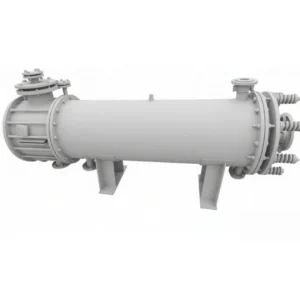
Although this design of graphite heat exchanger offers notable advantages, we highly recommend our cylindrical block graphite heat exchangers for superior reliability, versatility, and cost-effectiveness. Click here to learn more about the detailed specifications.
Reviews
There are no reviews yet.