
I. Product Functions
The silicon carbide heat exchanger is a special heat exchange device designed for highly corrosive chemical conditions. Its core heat exchange element is a pressureless sintered silicon carbide tube. Relying on the excellent thermal conductivity and extreme chemical stability of silicon carbide, it achieves efficient heat transfer between hot and cold media. The equipment integrates heating, cooling, condensation, evaporation, and medium recovery. It can be used as a silicon carbide cooler, heater, condenser, or waste acid recovery heat exchanger. It is widely used in fine chemicals, hydrometallurgy, lithium battery new materials, environmental waste acid recovery, pharmaceutical chemicals, dye chemicals, and other demanding production scenarios.
Unlike graphite heat exchangers, pressureless sintered silicon carbide can be stably used in nitric acid, concentrated sulfuric acid, and strong alkali conditions. It solves the industry pain points of graphite, stainless steel, and titanium equipment, such as poor resistance to strong oxidizing acids and strong alkalis, easy corrosion, easy scaling, and rapid heat exchange efficiency decay. Compared with graphite heat exchangers, silicon carbide has a wider applicable medium range and longer service life. It is a core device for heat exchange and condensation recovery of strong oxidizing acids, strong alkalis, and other harsh corrosive fluids.
II. Structural Forms
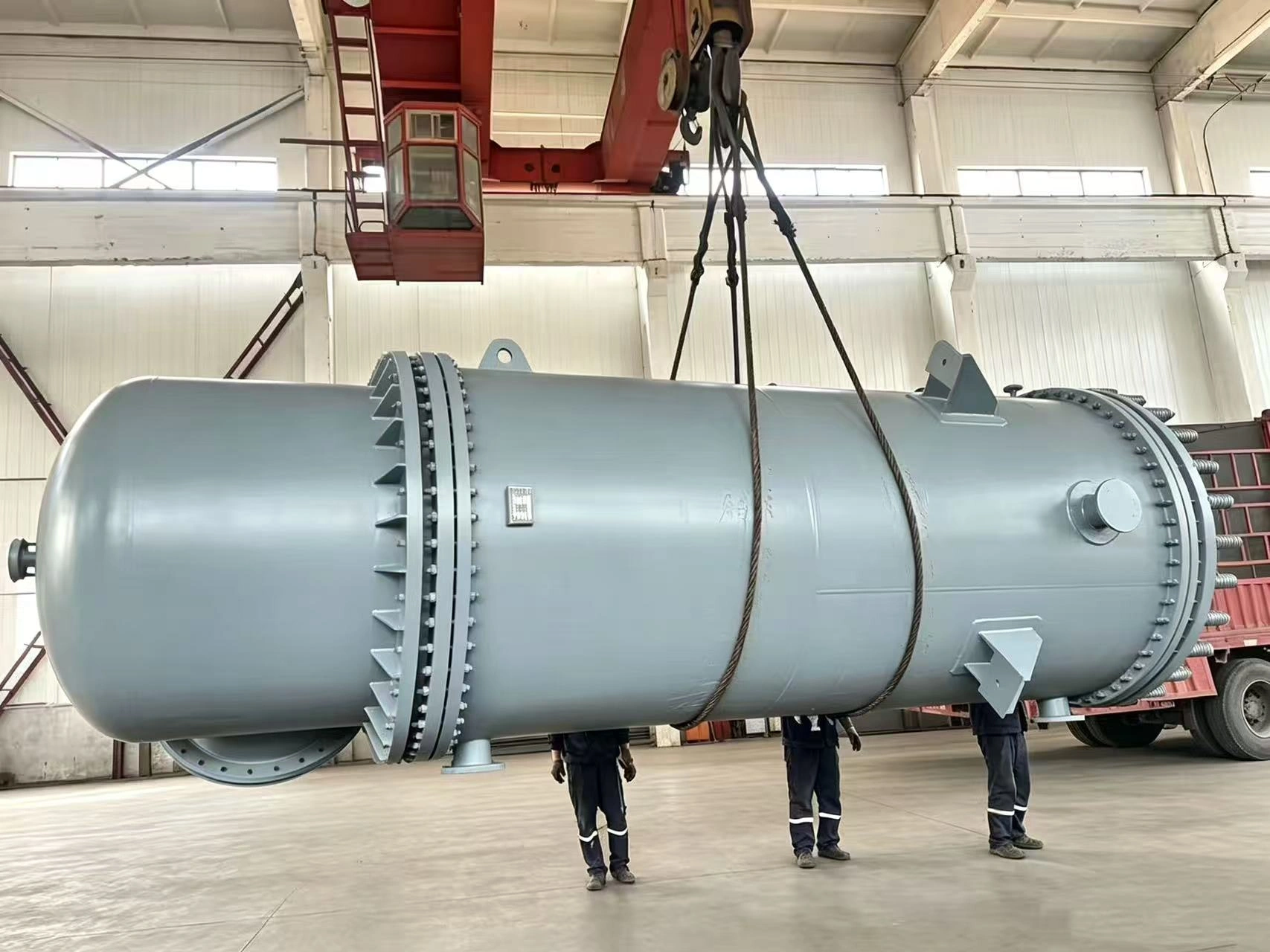
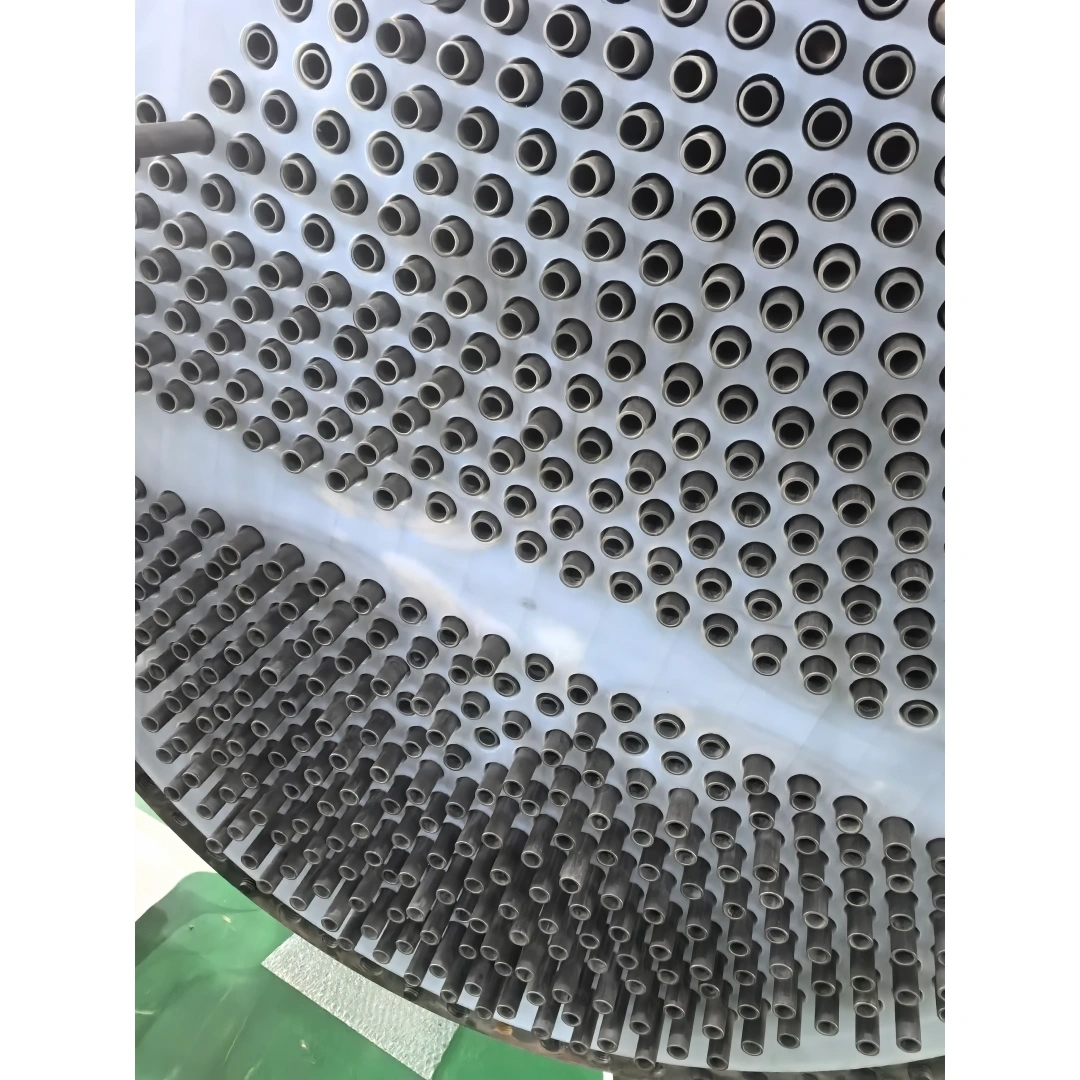
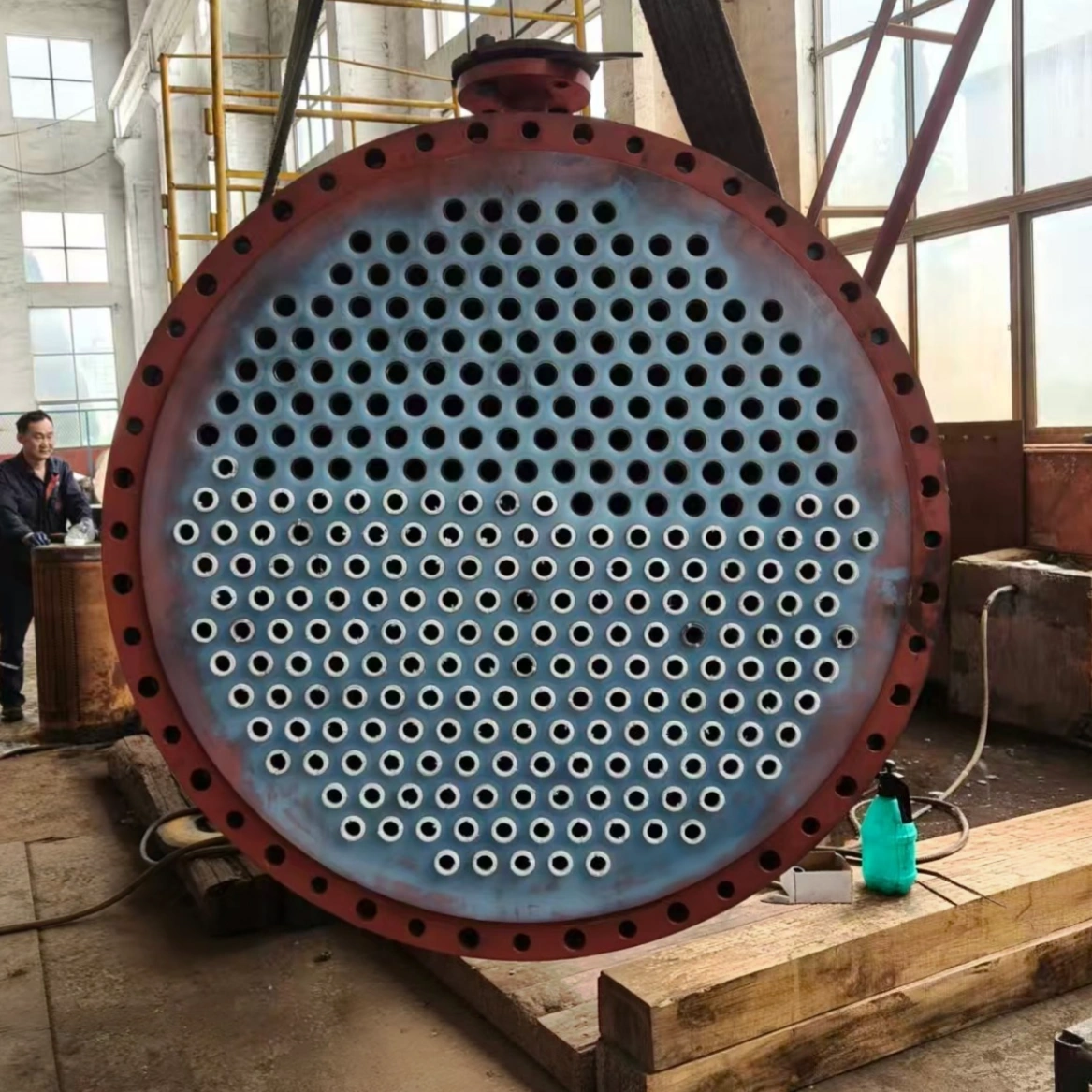
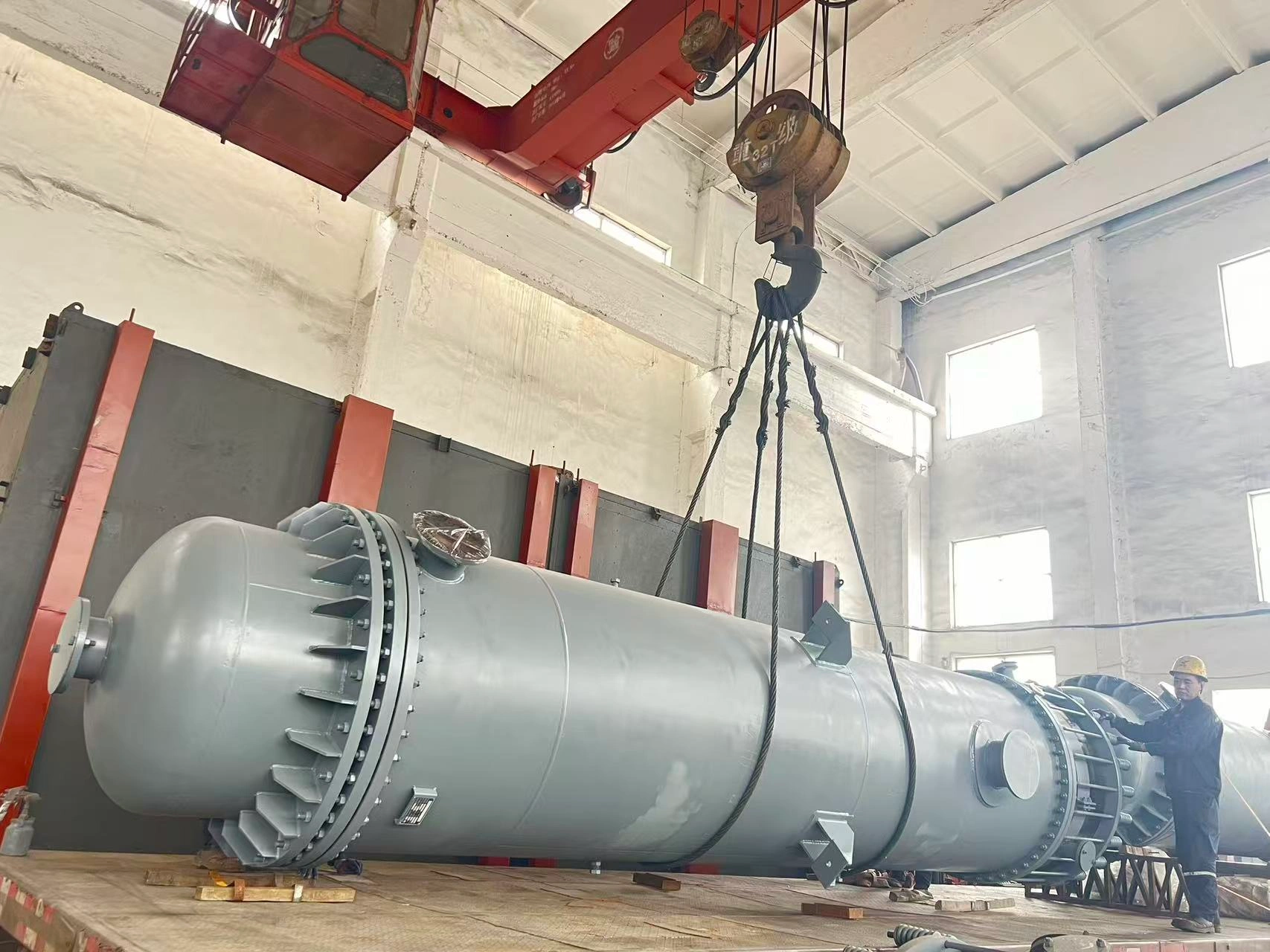
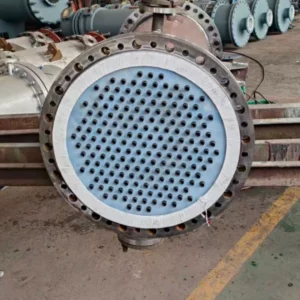
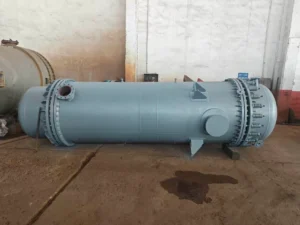
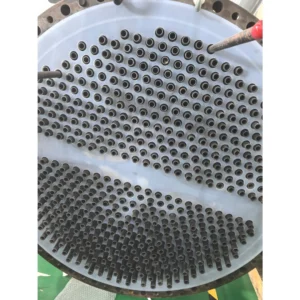
The silicon carbide heat exchanger is a standard shell-and-tube structure. It consists of a pressureless sintered silicon carbide tube bundle, silicon carbide tube sheet, metal shell, sealing components, and end heads at both ends. It has a compact structure, low flow resistance, and convenient maintenance. The shell side and tube side media are completely isolated and do not mix, independently completing heat exchange. It is divided into fixed tube sheet and floating head structures. The floating head structure can automatically compensate for the thermal expansion and contraction stress of the tube bundle, adapting to continuous production conditions with large temperature differences.
Important note: The silicon carbide heat exchanger has no bonded sealing structure and only uses O-ring sealing. It relies on a temperature-resistant and corrosion-resistant O-ring elastic seal to offset the thermal expansion displacement of the silicon carbide tube bundle under high temperature, avoiding tube opening stress cracking and leakage. It is suitable for medium-high temperature and large temperature fluctuation corrosive heat exchange conditions.
The heat exchange area can be flexibly customized by adjusting tube length and bundle quantity. Full non-standard sizes are available. Main silicon carbide tube outer diameter specifications: 25 mm, 19 mm, 16 mm, and 14 mm.
III. Product Features
-
Superior broad-spectrum corrosion resistance, resistant to nitric acid, concentrated sulfuric acid, and strong alkalis: Made of dense pressureless sintered silicon carbide, with no free silicon and extremely low apparent porosity. It has strong chemical inertness. In addition to conventional hydrochloric acid, dilute sulfuric acid, organic acids, salt solutions, and organic solvents, it can stably withstand nitric acid, concentrated sulfuric acid, strong alkalis, and other strongly corrosive media that graphite cannot handle. It has no electrochemical corrosion and will not age or fail.
-
Excellent thermal conductivity and high heat exchange efficiency: Pressureless sintered silicon carbide has thermal conductivity close to isostatic graphite, far exceeding titanium, stainless steel, PTFE, and other anti-corrosion materials. The straight-through smooth flow channel has no dead corners, low medium flow resistance, supports large-flow material heat exchange, and has a high heat exchange coefficient.
-
Single reliable O-ring elastic seal: Only O-ring sealing is used. Elastic seals compensate for thermal expansion, prevent tube opening stress cracking, and adapt to high-low temperature and alternating hot-cold conditions.
-
Dense and smooth tube wall, not easy to scale, simple maintenance: The pressureless sintered silicon carbide tube wall is dense and flat. Media do not easily adhere or adsorb. It is not easy to coke or scale under high temperature. The straight-through tube structure can be directly flushed and unclogged.
-
High strength and excellent thermal shock resistance: Compared with the brittleness of graphite, pressureless sintered silicon carbide has high mechanical strength, a low coefficient of thermal expansion, and excellent thermal shock resistance. It is not easy to crack or deform under frequent hot-cold alternating conditions and has strong medium scouring resistance.
-
Modular structure, low operation and maintenance cost: The tube bundle and tube sheet are independent modular components. A single damaged tube can be replaced individually without scrapping the entire equipment.
-
ASME design standard reference: For export high-end projects, structural design, stress verification, and process optimization can be carried out with reference to ASME pressure vessel standards.
-
Complete delivery documents, full traceability: Factory delivery includes a full set of technical documents: raw material quality certificates, welding process documents, quality plans, hydrostatic test reports, and non-destructive testing records.
-
Professional shock-proof reinforced packaging: Considering the brittleness of ceramics, metal frame protection + solid wood pallet shock absorption and buffering packaging are used to resist long-distance transportation extrusion and impact, avoiding tube opening chipping and tube body cracking.
Product Limitations
-
Pressureless sintered silicon carbide is a brittle ceramic material. Heat exchange tubes and tube openings are weak points. Overpressure operation and severe vibration are strictly prohibited. Impact, collision, and unilateral force are strictly prohibited during transportation and installation.
-
Although it can withstand most strong acid and alkali media, some fluorine-containing composite media and high-temperature molten special media will still slowly erode the material. Medium corrosion assessment is required in advance.
-
The shell-and-tube structure has many sealing points at tube openings and tube sheets. Under frequent temperature fluctuation conditions, regular inspection of sealing status is required.
-
O-ring seals are wearing parts and will naturally age during long-term operation. Regular inspection and replacement are required to prevent medium leakage.
IV. Core Performance Indicators
-
Material grain size: Pressureless sintered silicon carbide is used, with an average grain size of 4–10 μm. It has high density, uniform structure, extremely low apparent porosity, and excellent anti-permeation performance.
-
Thermal conductivity: Pressureless sintered silicon carbide has a room-temperature thermal conductivity of 140–160 W/(m·K). Heat conduction is uniform and stable. The whole tube and whole bundle have good heat exchange consistency, with no local overheating.
-
Standard working condition parameters: Conventional design pressure ≤0.8 MPa. Design temperature depends on sealing component limits. The material itself can withstand up to 1700°C. High-temperature and high-pressure strengthened versions can be customized.
-
Multi-material shell options: According to on-site anti-corrosion, structural strength, and budget, carbon steel, stainless steel, carbon steel lined with PP, and carbon steel lined with PTFE shells can be customized.
V. Customization Service Model (One-Stop Heat Exchange Solution)
We have a professional heat exchange thermal design team, providing full-process one-stop services including thermal calculation, scheme design, custom production, and delivery. Two cooperation modes are supported:
-
Custom production from drawings: Customers provide drawings, heat exchange area, tube diameter, and process parameters. We strictly carry out precision machining, assembly, and pressure testing according to drawings, fully matching on-site installation dimensions and equipment standards.
-
Design based on working condition parameters: Customers provide medium composition, corrosion characteristics, flow rate, inlet and outlet temperatures, working pressure, and heat exchange/condensation/evaporation requirements. We independently complete thermal calculation, heat exchange area verification, tube bundle selection, and sealing structure matching, and output a customized solution.
We can customize silicon carbide condensers, heaters, evaporators, and waste acid recovery heat exchange equipment according to process requirements.
VI. Material Selection Standards and Precautions
1. Forming material selection
This series of silicon carbide heat exchangers only uses pressureless sintered silicon carbide heat exchange elements, not reaction-bonded silicon carbide or recrystallized silicon carbide. Pressureless sintered silicon carbide has no free silicon, high density, and broad-spectrum corrosion resistance. It can be stably used in nitric acid, concentrated sulfuric acid, strong alkalis, and other conditions that graphite cannot handle. It has excellent thermal shock resistance and penetration resistance. Low-density porous bodies are prohibited for heat exchange tubes and tube sheets.
2. Medium adaptation
Pressureless sintered silicon carbide has far better corrosion resistance than graphite. In addition to hydrochloric acid, dilute sulfuric acid, organic acids, salt solutions, and organic solvents, it can be used long-term in nitric acid, concentrated sulfuric acid, strong alkalis, and other strongly corrosive media. Refer to the corrosion rate table below.
Table: Typical Medium Corrosion Rate Comparison (Unit: mg/cm²·year)
Test conditions: immersion 125–300 hours, continuous stirring
| Corrosive Medium | Concentration (wt%) | Temperature °C | corrosion rate |
|---|---|---|---|
| Hydrochloric acid | 37% | 86 | <0.2 |
| Nitric acid | 70% | 100 | <0.2 |
| Sulfuric acid | 98% | 100 | 1.8 |
| Phosphoric acid | 85% | 100 | <0.2 |
| HF + HNO₃ mixture | 10% HF + 57% HNO₃ | 25 | <0.2 |
| Hydrofluoric acid | 53% | 25 | <0.2 |
| Potassium hydroxide | 45% | 100 | <0.2 |
| Sodium hydroxide | 50% | 100 | 2.5 |
Corrosion rate reference:
-
<0.2 mg/cm²·year: Recommended for long-term use, almost no corrosion
-
0.3–9.9 mg/cm²·year: Recommended for long-term use
-
10–49 mg/cm²·year: Use with caution under specific conditions
-
50–99 mg/cm²·year: Not recommended for more than one year
-
100–999 mg/cm²·year: Not recommended for more than one month
-
1000 mg/cm²·year: Material completely destroyed in a short time
3. Working condition adaptation requirements
The equipment only uses O-ring elastic sealing, which can automatically compensate for thermal expansion displacement and avoid tube opening leakage. For large flow and strong scouring conditions, pressureless sintered silicon carbide tubes are selected to improve scouring resistance and extend service life.
4. Assembly matching requirements
The equipment installation base must be horizontal and flat. The whole machine must be evenly stressed. Unilateral suspension and eccentric load are prohibited. Pipeline connection must not be forced alignment to prevent stress cracking of silicon carbide tube bundles and tube sheets. Gradient heating is required at startup. Rapid cooling and heating are strictly prohibited.
5. Machining process requirements
Silicon carbide tube inner and outer walls are precision machined, with smooth inner walls and no material accumulation dead corners. Tube sheet holes are precision bored, with uniform hole diameters and stable assembly clearance. Tube openings are chamfered and passivated to prevent assembly collision and chipping. Sealing surfaces are precision ground and leveled to ensure no leakage. All force-bearing positions have rounded transitions.
VII. Physical Performance Indicators of Pressureless Sintered Silicon Carbide Tubes
The heat exchange tube is formed by pressureless sintering of high-purity silicon carbide powder. Only pressureless sintered silicon carbide is used.
1. Basic Material Properties
-
Silicon carbide content: >98.5 wt%
-
Average grain size: 4–10 microns
-
Density: >3.14 kg/dm³
-
Apparent porosity: <0.5 vol%
-
Vickers hardness: 28 GPa
-
Flexural strength (3-point, 20°C): 450 MPa
-
Compressive strength (20°C): 3900 MPa
-
Elastic modulus (20°C): 420 GPa
-
Fracture toughness: 3.5 MPa/m⁰·⁵
-
Thermal conductivity (20°C): 160 W/(m·K)
-
Resistivity (20°C): 10⁹–10¹⁰ Ohm·cm
-
Coefficient of thermal expansion (RT–800°C): 4.3×10⁻⁶ K⁻¹
-
Maximum service temperature: 1700°C (inert atmosphere)
Note: Material temperature resistance is not equal to the overall allowable operating temperature of the equipment. The maximum operating temperature is limited by O-ring seals.
2. Finished Product Inspection and Selection Notes
Factory mandatory inspection: All silicon carbide tubes undergo a hydrostatic test. Holding pressure for 30 minutes without leakage is qualified. Appearance inspection: no cracks, chipping, delamination, or hole defects.
Selection core note: This heat exchange equipment only uses pressureless sintered silicon carbide, not other types of silicon carbide. Pressureless sintered silicon carbide has extremely low corrosion rates and can work stably in nitric acid, concentrated sulfuric acid, strong alkalis, and other strongly corrosive media for long periods, with corrosion rate <0.2 mg/cm²·year, suitable for long-term continuous production.
Engineering note: Laboratory specimen indicators are baseline parameters. After machining, hole opening, and assembly, actual working condition performance will slightly decline. Equipment design must be comprehensively calculated in combination with structural form, medium temperature, and pressure.
3. Selection Recommendations
For all strongly corrosive conditions, including conventional acidic media, nitric acid, concentrated sulfuric acid, strong alkalis, and oxidizing corrosive systems, pressureless sintered silicon carbide tubes are uniformly selected. For strong oxidation, strong alkali, high-purity materials, and large temperature difference hot-cold alternating conditions, pressureless sintered silicon carbide is the preferred material, replacing graphite and other traditional materials and solving the shortcomings of graphite in nitric acid, concentrated sulfuric acid, and strong alkalis.
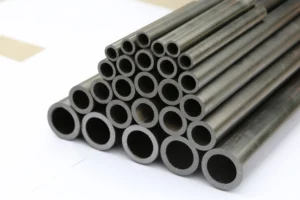
VIII. Standard Specifications of Pressureless Sintered Silicon Carbide Heat Exchange Tubes
| Nominal Size | Outer Diameter OD (mm) | Inner Diameter ID (mm) | Tolerance X (mm) | Out-of-Roundness (mm) | Maximum Length L ±2 mm |
|---|---|---|---|---|---|
| DN8 | 8 | 6 | ±0.1 | ≤0.2 | 2000 |
| DN10 | 10 | 8 | ±0.2 | ≤0.2 | 2000 |
| DN14 | 14 | 11 | ±0.3 | ≤0.3 | 4000 |
| DN19 | 19 | 14.5 | ±0.4 | ≤0.4 | 4000 |
| DN25 | 25 | 20 | ±0.5 | ≤0.5 | 4000 |
| DN35 | 35 | 25 | ±0.7 | ≤0.7 | 4000 |
| DN38 | 38 | 28 | ±0.8 | ≤0.8 | 4000 |
Note:
1、The main recommended specifications are DN14, DN19, and DN25. Other specifications can be customized on demand.
2、We also supply Pressureless Sintered Silicon Carbide (SSiC) heat exchanger tubes.
Reviews
There are no reviews yet.