
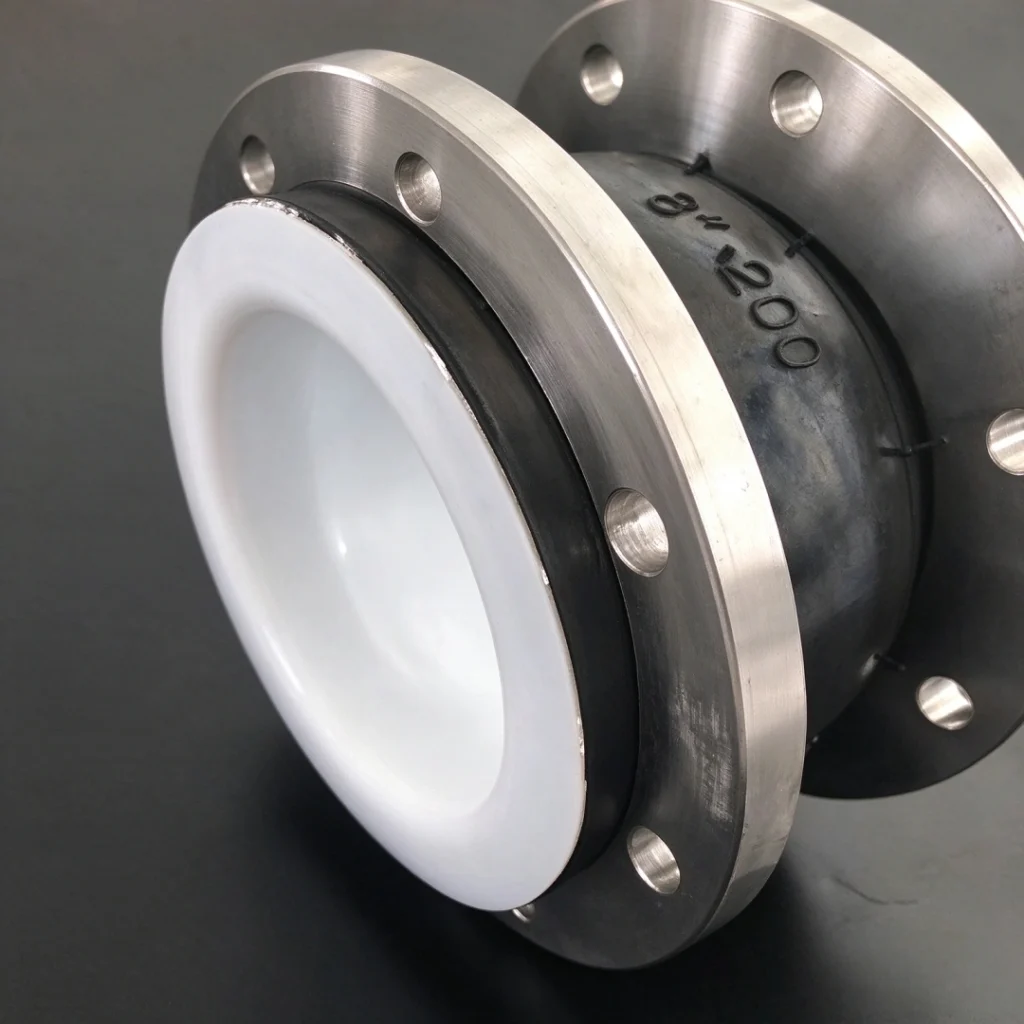
In chemical, pharmaceutical, metallurgical, and other severe corrosive industries, fluoropolymer-lined equipment (such as PTFE/PFA-lined pipes, fittings, and valves) serves as the core defense system ensuring safe production. However, because lining materials are delicate and extremely sensitive to temperature and vacuum conditions, any carelessness during procurement inspection or on-site testing can lead to leakage and failure.
Based on the latest industry standard HG/T 4088—2024 (General Technical Conditions for Plastic-Lined Equipment), this article systematically outlines the mainstream molding processes, core performance metrics, and on-site inspection methods for fluoropolymer-lined components, providing a solid data reference for your project selection and receiving inspection.
I. Mainstream Molding Processes for Fluoropolymer-Lined Components (Standard Definitions)
-
Sheet Lining: Utilizing adhesives to attach plastic sheets to the inner surface of the metal substrate, with joints connected via welding to form the lining layer.
-
Spray Lining: Spraying thermoplastic plastic powder or suspension onto the inner surface of the metal equipment, followed by high-temperature melting to form the plastic lining layer.
-
Roll Molding Lining (Also known as rotational molding or rotomolding): Under room temperature conditions, a quantitative amount of plastic powder or liquid raw material is placed into a closed vessel. The equipment is placed in a heating chamber and rotated continuously along dual axes while the raw material melts and adheres to the inner walls of the equipment.
II. Core Performance Metrics (HG/T 4088-2024 Specifications)
1. Applicable Temperature Limits
| Material Type | Applicable Temperature Range (°C, Non-Corrosive Baseline) | Process Characteristics & Application Scenarios |
|---|---|---|
| PTFE (Polytetrafluoroethylene) | -29 to 260 | Highest temperature resistance and exceptional anti-permeation performance; predominantly used for large-diameter straight pipes and standard sheet-lined components. |
| PFA (Perfluoroalkoxy Alkane) | -29 to 260 | Supports heat-fusion welding and injection molding, adapting well to complex structural parts like ball valves and shaped fittings. |
| FEP (Fluorinated Ethylene Propylene) | -29 to 149 | Excellent mechanical properties, but the upper temperature limit is lower than PTFE and PFA. |
| ETFE (Ethylene-Tetrafluoroethylene) | -29 to 149 | Superior mechanical strength with a relatively low maximum temperature limit. |
⚠️ Important Engineering Warning: The temperatures listed above are reference values under non-corrosive, atmospheric baseline conditions. In environments combining corrosive media, pressure, and vacuum, the allowable operating temperature of the lining must be derated, with specific limits verified through testing by the manufacturer.
2. Pressure Regulations
The maximum operating pressure of fluoropolymer-lined components must simultaneously satisfy three constraints:
-
Maximum operating pressure ≤ Design pressure of the metal substrate;
-
Maximum operating pressure ≤ Maximum sealing pressure of the flange sealing faces and nozzle sealing faces;
-
Under high-temperature and severe corrosive conditions, the pressure-bearing upper limit is jointly determined by the lining material, lining thickness, and the bonding state between the lining and the substrate.
3. Lining Thickness and DC High-Voltage Spark Test Voltages
Spark testing is the most critical non-destructive testing method for fluoropolymer linings, used to check for pinholes, damage, and adhesion defects.
| Lining Thickness (mm) | DC Spark Test Voltage (kV) |
|---|---|
| 0.5 | 5 |
| 1.0 | 6.5 |
| 1.5 | 8 |
| 2.0 to 4.0 | 10 |
| > 4.0 | 20 (Spray/Roll Molded) / 10 (Sheet Lined) |
Sheet-Lined Components: When the lining thickness exceeds 4mm, the spark test voltage shall not be less than 10kV.
Pass/Fail Criteria: The entire scanning process must show no breakdown and no flashover, confirming that the lining is free of pinhole defects.
4. Raw Material Technical Requirements
-
PTFE sheet quality shall comply with QB/T 5257; PTFE raw materials shall comply with HG/T 2902.
-
PFA sheet quality shall comply with HG/T 4173-2011 Appendix A.
III. On-Site Acceptance and In-Service Inspection Methods
DC High-Voltage Spark Testing (Primary Mandatory Item)
-
Applicable Scenarios: Ex-works factory inspection, on-site receiving inspection, post-maintenance re-inspection, and routine online testing.
-
Operation Key Points: Verify the actual thickness to match the appropriate test voltage; sweep the probe uniformly across all lining surfaces, paying special attention to high-stress concentration areas such as welds, corners, flange roots, elbows, and tees; strictly prohibit testing above standard voltages, as excessive voltage can artificially puncture an intact lining layer.
Hydrostatic Testing Regulations
-
If the substrate has already completed hydrostatic testing and passed prior to spray or roll-molding lining application, hydrostatic testing shall not be repeated after the lining is completed.
-
If hydrostatic testing was not performed prior to substrate application, conduct the hydrostatic test according to drawing requirements, and perform a re-inspection via spark testing only after passing.
Visual Inspection (High-Risk Defect Screening)
-
Focus areas: Lining blistering, delamination/debonding, cracking, weld porosity, corner tearing, and flange edge warping.
-
Caution: Lining blistering indicates that the lining has detached from the metal substrate, which easily leads to vacuum collapse failure under negative pressure—this is a high-risk defect requiring rejection.
Operating Boundary Verification Prior to Commissioning
-
Media Compatibility: PTFE and PFA withstand most strong acids and alkalis, but are unsuitable for molten alkali metals, high-temperature chlorine trifluoride, etc.
-
Temperature/Vacuum Derating: Under co-existing vacuum and corrosive conditions, both allowable operating temperatures and vacuum limits must be significantly reduced.
IV. Selection and Acceptance FAQ
Q1: Are the temperature limits of PFA lining and PTFE lining the same?
A: The standard nominal temperature range for both is -29 to 260°C. The main difference lies in processing characteristics: PFA supports melt-integrated molding, making it ideal for ball valves and complex shaped fittings, whereas PTFE sheet-lining is better suited for large-diameter straight pipes.
Q2: Can the equipment be operated continuously at 260°C just because it passes the spark test?
A: No. Baseline temperatures are affected by corrosive media, pressure, and vacuum overlay, requiring appropriate derating for operation.
Q3: Are spark testing standards consistent across different molding processes?
A: For thicknesses under 4mm, the voltage thresholds are uniform. When thickness exceeds 4mm, sheet-lined components require a minimum test voltage of ≥10kV, while spray- or roll-molded linings require 20kV.
If you need to customize fluoropolymer-lined pipes, fittings, and valves conforming to the HG/T 4088 standard for specific chemical applications, feel free to contact our engineering team for professional selection and technical support.