
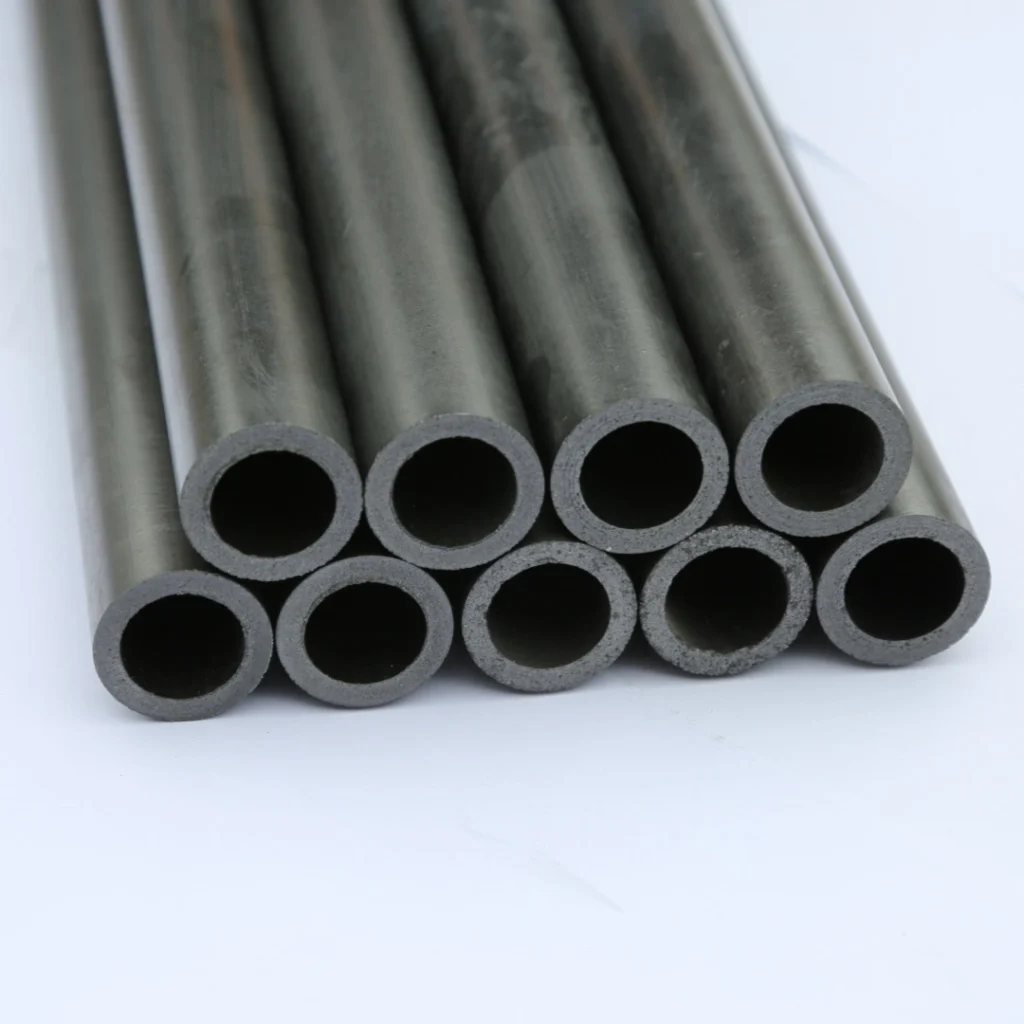
In chemical processing, hydrometallurgy, pickling, and environmental waste acid recovery, shell-and-tube heat exchangers operate under exceptionally harsh chemical conditions. At the core of every reliable unit are high-performance graphite heat exchanger tubes.
As specialized graphite heat exchanger manufacturers, we engineer premium extruded phenolic resin-impregnated graphite tubes. Formulated with high-purity artificial graphite powder aggregate and cured via impregnation and extrusion molding, our tubes feature ultra-low porosity, superior mechanical strength, and high thermal efficiency—making them the industry standard for severe corrosive heat transfer.
Part I: Core Advantages & Performance Engineering
Superior Anti-Permeation Reliability
Our graphite heat exchanger tubes demonstrate absolute zero permeability under a 0.8 MPa hydraulic pressure test. The high-density composite matrix prevents aggressive media from penetrating tube walls, guaranteeing safe physical isolation between process-side and shell-side fluids.
Exceptional Thermal Shock Resistance
Engineered to handle thermal cycling, our tubes withstand over 35 consecutive rapid quenching cycles from 200°C down to 20°C without micro-cracking or structural degradation, significantly extending equipment service life.
High Thermal Conductivity & Pressure Capacity
With thermal conductivity ranging from 30.4 to 40.7 W/(m·K), these tubes deliver excellent thermal transfer efficiency. High compressive strength (86.2 to 120 MPa) allows them to operate reliably under high system working pressures.
Broad Chemical Compatibility Spectrum
Impervious to hydrochloric acid (any concentration), sulfuric acid (<75%), phosphoric acid (<85%), and most organic acids and solvents (including acetone, benzene, and gasoline).
Part II: Material Properties & Operational Boundaries
Physical Characteristics
High bulk density (1.80–1.93 g/cm³), ultra-low water absorption (0.07%), Martens heat resistance ≥170°C, max operating temperature ≤170–180°C, and thermal decomposition temperature at 250–260°C.
Selection Alert & Operational Limits
Phenolic resin-bonded graphite tubes are NOT resistant to 80% sulfuric acid, 30% nitric acid, hydrobromic acid, >10% sodium hydroxide (alkali solutions), dry chlorine gas, bromine, or iodine. As experienced graphite heat exchanger manufacturers, we strongly advise verifying media concentrations and working temperatures prior to final system selection.
Appendix: Technical Data & Chemical Resistance Tables
Table 1: Physical and Mechanical Properties
| Property Item | Phenolic Extruded Graphite Tube |
|---|---|
| Bulk Density (g/cm³) | 1.80–1.93 |
| Water Absorption (%) | 0.07 |
| Martens Heat Resistance (°C) | ≥170 |
| Thermal Conductivity (W/(m·K)) | 30.4–40.7 |
| Thermal Shock Resistance (200°C to 20°C Rapid Quench) | >35 cycles |
| Linear Expansion Coefficient (1/°C, 100–200°C) | (1.48–1.94) × 10⁻⁵ |
| Compressive Strength (MPa) | 86.2–120 |
| Tensile Strength (MPa) | 24.5–28.2 |
| Flexural Strength (MPa) | 60 |
| Impact Strength (N·cm/cm²) | 29–34 |
| Impermeability | 0.8 MPa No Leakage / No Permeation |
| Hydraulic Bursting Pressure (MPa) | 7–9 (φ32/φ22 mm) 7–9 (φ38/φ25 mm) 5–7 (φ42/φ30 mm) 5–7 (φ38/φ25 mm) <5 (Above φ55/φ40 mm) |
| Max Operating Temperature (°C) | ≤170–180 |
| Decomposition Temperature (°C) | 250–260 |
Table 2: Chemical Corrosion Resistance Chart
| Category | Media / Chemical | Concentration (%) | Temp (°C) | Resistance Rating |
|---|---|---|---|---|
| Acids | Hydrochloric Acid | Any | <Boiling Point | Resistant |
| Sulfuric Acid | <75 | <120 | Resistant | |
| Sulfuric Acid | 80 | 120 | NOT Resistant | |
| Sulfurous Acid | Any | <Boiling Point | Resistant | |
| Phosphoric Acid | <85 | <Boiling Point | Resistant | |
| Nitric Acid | 5 | 20 | Resistant | |
| Nitric Acid | 30 | 50 | NOT Resistant | |
| Acetic Acid | 100 | 20 | Resistant | |
| Acetic Acid | <50 | 100 | Resistant | |
| Formic Acid | Any | <Boiling Point | Resistant | |
| Oxalic Acid | Any | 100 | Resistant | |
| Butyric Acid | — | 20 | Resistant | |
| Hydrobromic Acid | Any | <Boiling Point | NOT Resistant | |
| Chloroacetic Acid | — | <Boiling Point | Resistant | |
| Tartaric Acid | Any | <Boiling Point | Resistant | |
| Fatty Acids | Any | <Boiling Point | Resistant | |
| Hydrofluoric Acid | <48 | <Boiling Point | Resistant | |
| Alkalis | Sodium Hydroxide | >10 | — | NOT Resistant |
| Ammonium Hydroxide | 28 | 50 | Resistant | |
| Organic Media | Acetone | 100 | 20 | Resistant |
| Benzene | 100 | — | Resistant | |
| Gasoline | 100 | <Boiling Point | Resistant | |
| Methanol | — | <Boiling Point | Resistant | |
| Ethanol | — | <Boiling Point | Resistant | |
| Isopropanol | 100 | <Boiling Point | Resistant | |
| Amyl Alcohol | Any | <Boiling Point | Resistant | |
| Dichloroethane | Any | <Boiling Point | Resistant | |
| Chlorobenzene | Any | <Boiling Point | Resistant | |
| Chloral | 33 | 20 | Resistant | |
| Dichloromethyl Ether | — | 20–100 | Resistant | |
| Acrylonitrile | — | 20–60 | Resistant | |
| Paraffin Wax | — | 60 | Resistant | |
| Styrene | — | 20 | Resistant | |
| Ethylbenzene | — | 20 | Resistant | |
| Halogens | Dry Chlorine | 100 | — | NOT Resistant |
| Bromine | 100 | — | NOT Resistant | |
| Iodine | 100 | — | NOT Resistant | |
| Salts & Mixed Media | Ammonium Nitrate | 10 | 20 | Resistant |
| Sodium Hydrosulfide | Any | <Boiling Point | Resistant | |
| Sodium Sulfide | Any | <Boiling Point | Resistant | |
| Sodium Thiosulfate | Any | <Boiling Point | Resistant | |
| Copper Sulfate | Any | 20 | Resistant | |
| Ferric Sulfate | Any | <Boiling Point | Resistant | |
| Aluminum Sulfate | Any | <Boiling Point | Resistant | |
| Zinc Sulfate | Saturated | 60 | Resistant | |
| Aluminum Chloride | Any | <Boiling Point | Resistant | |
| Ammonium Chloride | Any | <Boiling Point | Resistant | |
| Ferrous Chloride | Any | <Boiling Point | Resistant | |
| Ferric Chloride | Any | <Boiling Point | Resistant | |
| Sodium Chloride | Any | <Boiling Point | Resistant | |
| Sodium Carbonate | Any | <Boiling Point | Resistant | |
| Ammonium Phosphate | Any | <Boiling Point | Resistant | |
| Potassium Persulfate | 5 | <60 | Resistant | |
| Dichlorobenzene / Dichloroethane / Polychlorides | — | 100 | Resistant | |
| Ether-Aldehyde Condensate | — | 20 | Resistant | |
| Dispersant Hφ | — | 20–60 | Resistant | |
| Nekal (Penetrant BX) | 20 | 20–60 | Resistant | |
| Nekal (Penetrant BX) | 20 | 100 | NOT Resistant | |
| DDT Solution | — | Acidity 0.06 | Resistant | |
| Chloroethane / HCl / Ethanol (Dye Industry)¹ | — | 140–25 | Resistant | |
| Chlorine + Alcohol + Water (Pesticide Industry)¹ | — | 60 | Resistant | |
| Wet SO₂ (Sulfuric Acid Plant)¹ | — | 80–40 | Resistant | |
| Nickel Sulfate / Nickel Chloride (Refining)¹ | — | 50–70 | Resistant | |
| Zinc Sulfate / H₂SO₄ (Electrolysis)¹ | — | 40–60 | Resistant | |
| Alkyl Sulfonyl Chloride | — | 80–25 | Resistant | |
| H₂SO₄ / Benzene (Refining)¹ | 70% H₂SO₄ | 90 | Resistant | |
| Protein Hydrolysate (MSG Production)¹ | — | 70–120 | Resistant |
(Note: ¹ Field case applications. For specific multi-component fluid mixtures or custom pressure-temperature designs, please consult our engineering team directly.)