
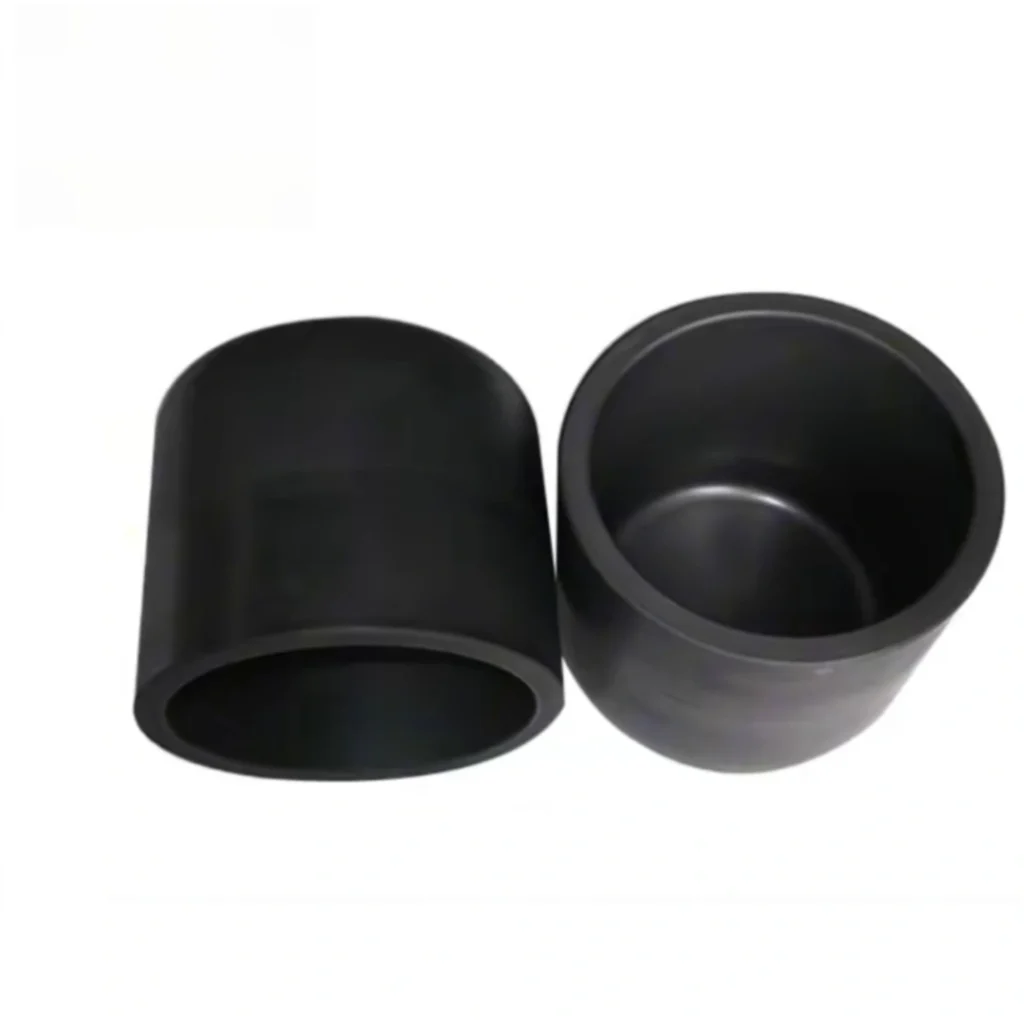
Intro
If you work with metal melting, precious metal refining, or laboratory high-temperature tests, you may ask: how long do graphite crucibles last? There is no fixed universal number. Service life is measured in melting cycles, not calendar time. A graphite crucible can last from dozens to hundreds of heats, determined mainly by graphite material grade, molten metal type, furnace atmosphere, thermal cycling, and daily operation practice.
Graphite crucibles are widely used for melting gold, silver, copper, copper alloys, and aluminum. Their main failure modes are high-temperature oxidation, thermal shock cracking, chemical erosion, and mechanical damage. With proper selection and maintenance, users can reduce downtime and lower overall consumable costs.
Typical Lifespan Reference by Application
-
Standard fine-grain molded graphite crucible (air atmosphere, copper/aluminum melting): 50–100 melting cycles
-
High-purity isostatic graphite crucible (inert/vacuum furnace, precious metals): 150–400+ cycles
-
Anti-oxidation-coated graphite crucible (SiC-based coating): 2–3 times longer than uncoated graphite
-
Open-air furnace with frequent rapid heating/cooling and aggressive fluxes: may drop to only 20–50 cycles
Important note: A vacuum or inert protective atmosphere greatly slows graphite oxidation, which is the biggest factor in extending crucible life. Graphite oxidizes rapidly above 500°C in oxygen-containing environments.
Note: These figures are experience-based references, not guaranteed service life.
Four Main Factors That Determine Graphite Crucible Lifespan
1. Graphite Raw Material & Manufacturing Method
Isostatically pressed graphite features uniform density, better thermal shock resistance, and higher purity, so it outperforms ordinary molded graphite under repeated high-temperature cycles. Fine-grain graphite has higher strength and better resistance to internal cracking than coarse-grain grades. Anti-oxidation impregnation or SiC-based coating forms a barrier layer that slows high-temperature oxidation.
2. Molten Metal & Flux Chemistry
Different metals and fluxes create different erosion levels. Gold, silver, and platinum-group precious metals cause mild chemical attack. Copper alloys and aluminum are moderate. Strongly corrosive slag or aggressive fluxes wear the inner wall much faster. Some alloying elements can also react with graphite and accelerate wall thinning. Highly reactive metals such as titanium and zirconium may react with graphite and are not recommended without special evaluation.
3. Furnace Atmosphere & Temperature Profile
Oxygen is graphite’s primary enemy. In an air atmosphere, continuous high temperature gradually consumes the crucible wall. A vacuum or argon/nitrogen protective atmosphere suppresses oxidation and dramatically extends usable cycles. Sudden heating or quenching creates severe thermal stress, leading to microcracks and early rupture.
4. Operation, Handling & Preheating
Improper preheating, dropping, impact, uneven loading, and residual moisture inside the crucible all cause premature failure. Moisture trapped inside graphite vaporizes quickly and can crack the crucible during the first heating.
How to Maximize Graphite Crucible Service Life
-
Slowly preheat new crucibles to remove trapped moisture before high-temperature melting.
-
Use a vacuum or inert protective atmosphere whenever possible for long-running high-temperature work.
-
Avoid rapid thermal shock; control heating and cooling rates steadily.
-
Prevent mechanical collision during transport, installation, and metal pouring.
-
Clean slag and residual flux after each melting cycle; avoid long-term flux soaking.
-
Select a matched graphite grade or anti-oxidation coating based on your metal and furnace environment.
When to Replace Your Graphite Crucible (Warning Signs)
Stop using and replace the crucible immediately if you observe:
-
Visible cracks, chipping, or flaking on inner/outer surfaces
-
Obvious wall thinning or uneven erosion
-
Local bulging or deformation after thermal cycles
-
Risk of leakage or contamination of molten metal
Note: If you notice any of these conditions, it is time to [replace your custom graphite crucible].
Conclusion
To answer the core question: How long do graphite crucibles last? It depends on the entire melting process. For open-air, non-precious metal melting, expect roughly 50–100 heats. For vacuum/inert-atmosphere precious metal melting using high-grade isostatic graphite, you can achieve hundreds of cycles.
The most cost-effective approach is matching the graphite crucible grade and surface treatment to your exact working conditions, not simply buying the cheapest option. If you need custom graphite crucibles for your melting furnace, contact our engineering team for material recommendations.
FAQ
Q: Can I reuse a graphite crucible after it cools down?
A: Yes, if there are no cracks, deformation, or severe wall erosion. Repeated thermal cycles gradually reduce strength. A full inspection is required before each new melt.
Q: Is a coated graphite crucible worth the extra cost?
A: In continuous high-temperature operation in an air environment, an anti-oxidation coating effectively reduces oxidation loss and can greatly reduce consumable replacement frequency.