
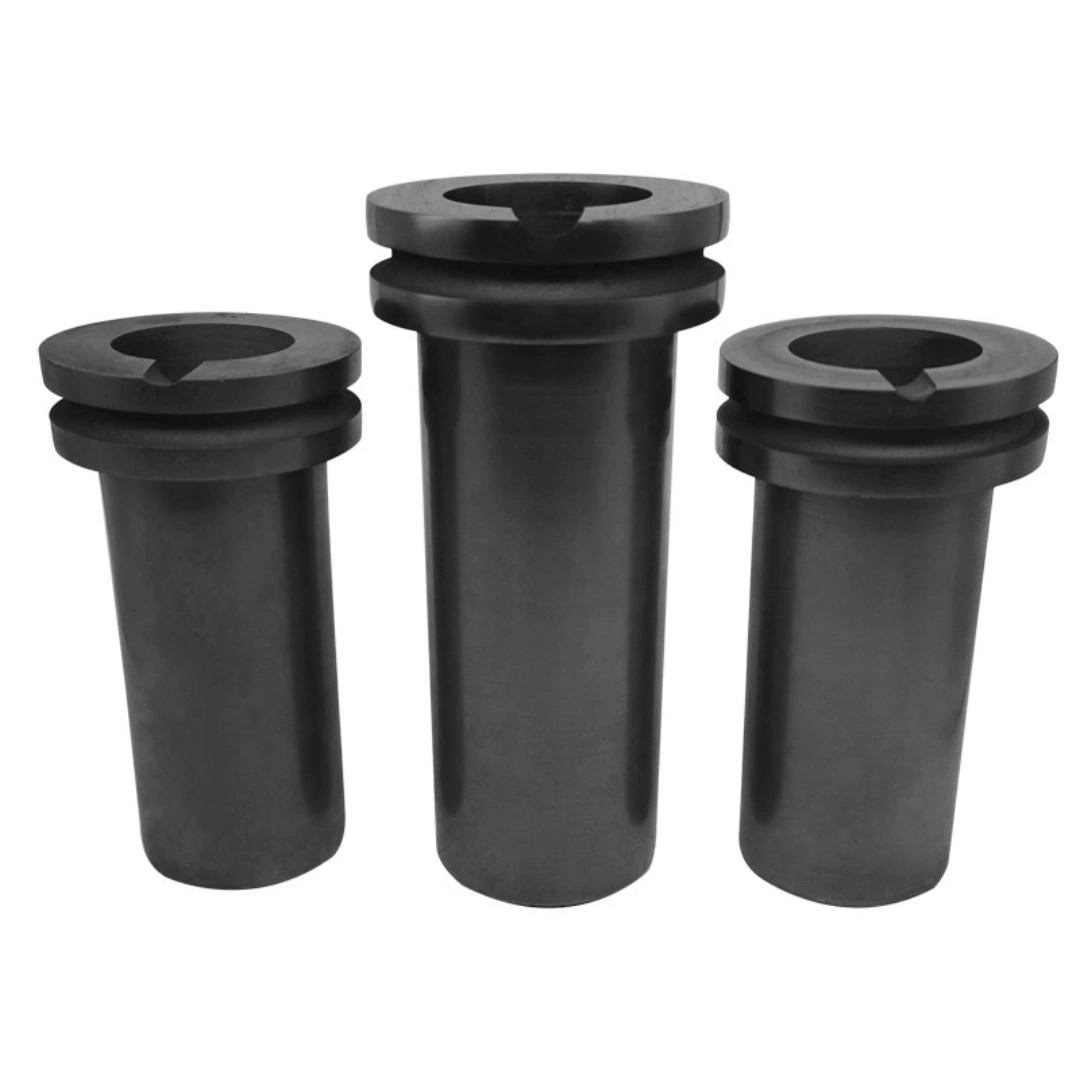
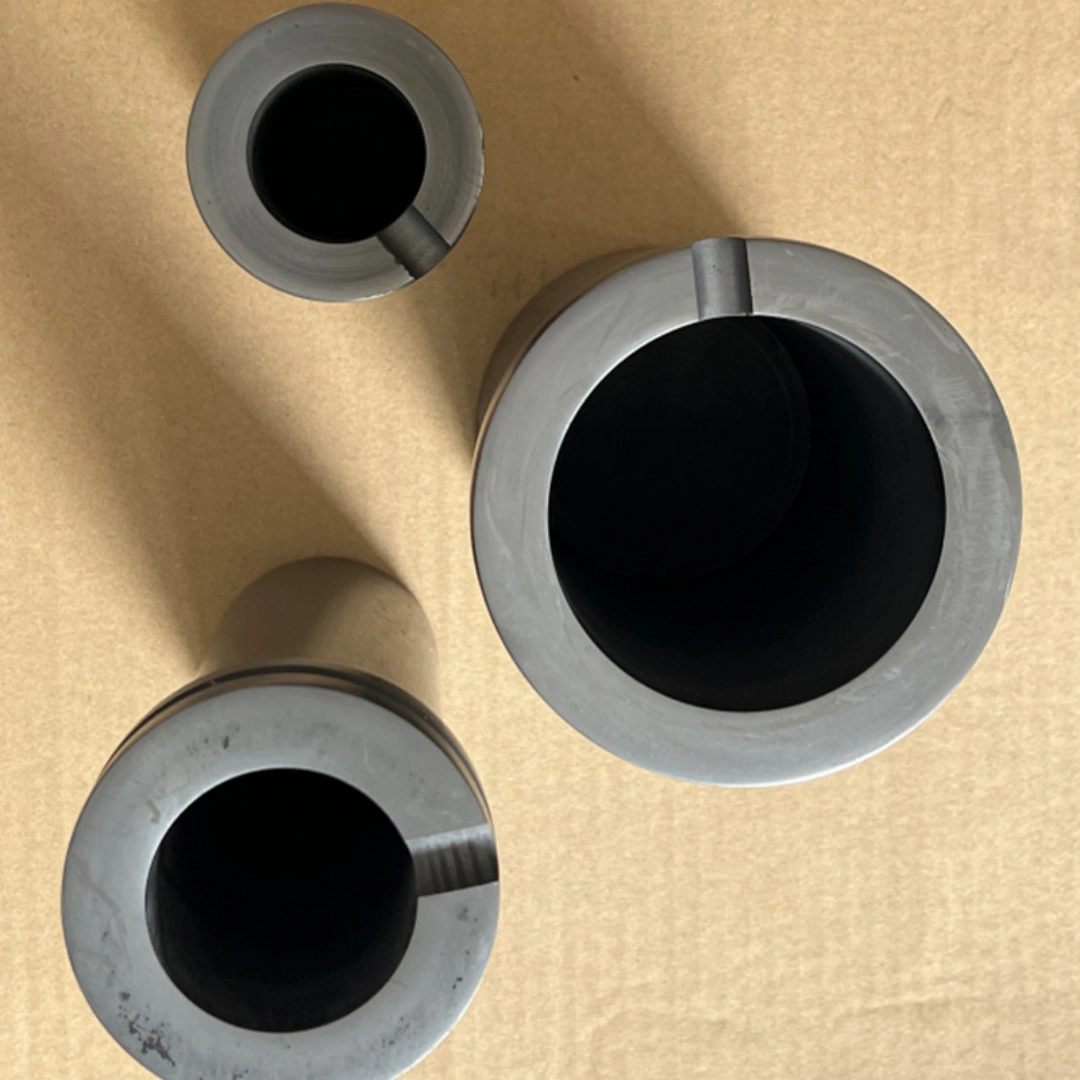
I. Graphite Crucible Product Functions
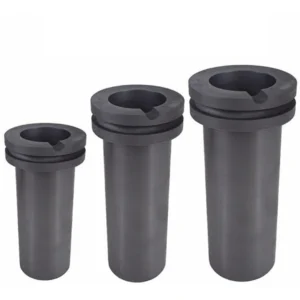
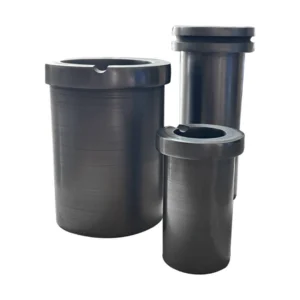
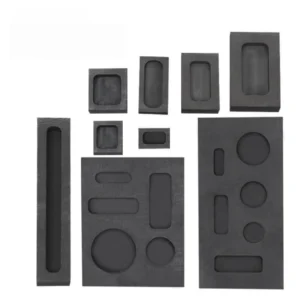
A graphite crucible is the most core high-temperature consumable in the melting process of medium-frequency furnaces, induction furnaces, and vacuum melting furnaces. This graphite crucible is used to hold and melt copper, aluminum, gold, silver, platinum, palladium, and other precious metals and various alloys. As a crucible and furnace component and a furnace crucible, the graphite crucible is suitable for atmospheric protection, inert atmosphere, vacuum melting, and other working conditions. It offers high-temperature resistance and good chemical inertness, reduces oxidation of molten metal, and ensures stable melt composition. Graphite oxidizes easily at high temperatures; long-term high-temperature use in oxygen-containing environments is strictly prohibited.
For silver melting, a ceramic crucible for melting silver, a melting silver crucible, a silver crucible, and a silver melting crucible are sometimes compared, but graphite crucibles are often preferred for their thermal shock resistance and uniform heat conduction.
II. Structural Forms
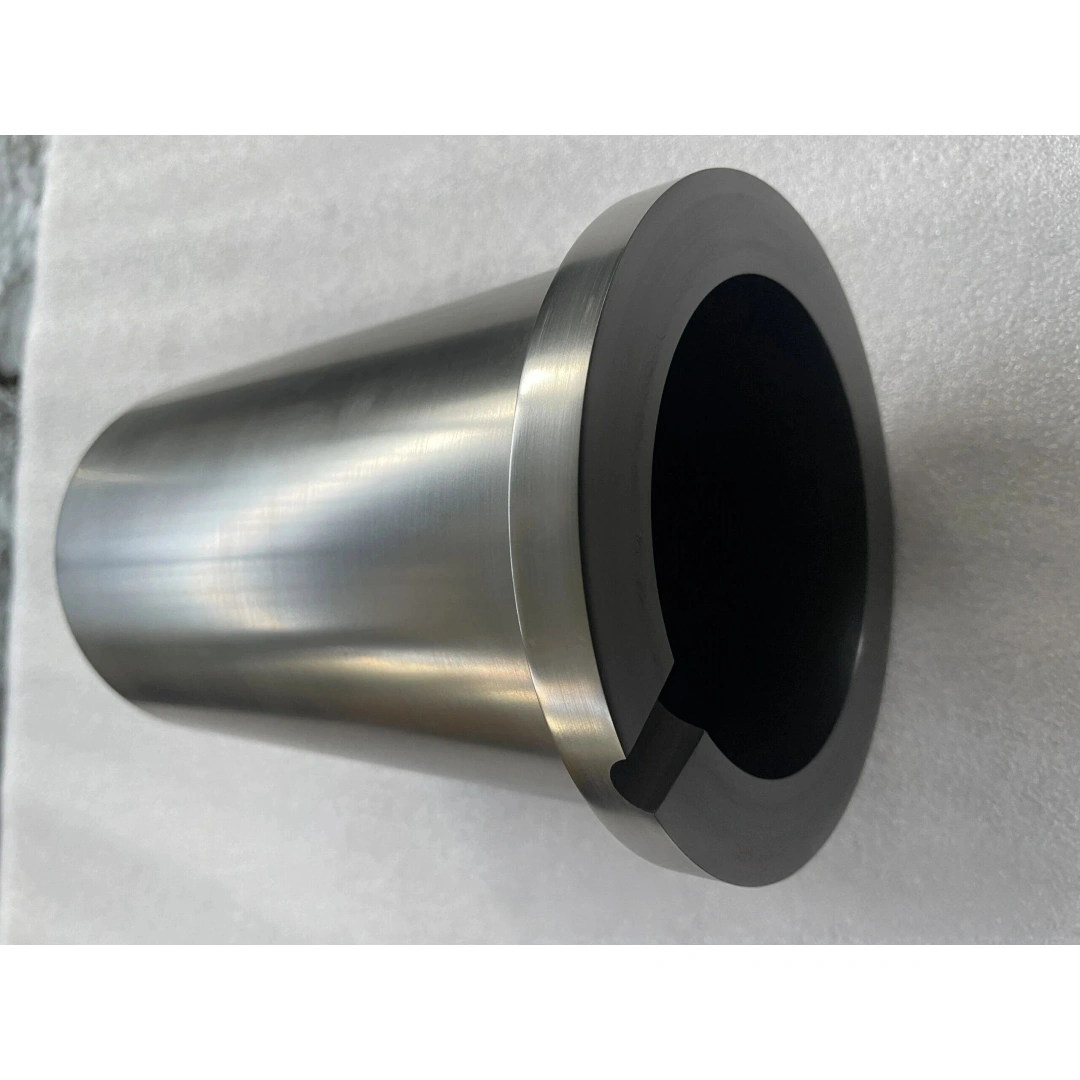
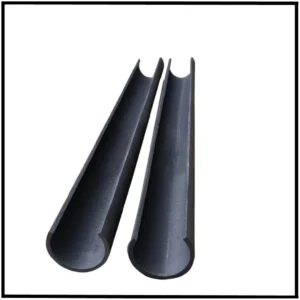
The crucible is an integral cylindrical container structure. Different inner diameters, heights, and wall thicknesses can be customized according to melting capacity and furnace type. It can be supplied with or without a base and is divided into fine-grain molded graphite crucibles and isostatic high-purity graphite crucibles. For high-purity precious metal melting, isostatic high-purity graphite is preferred.
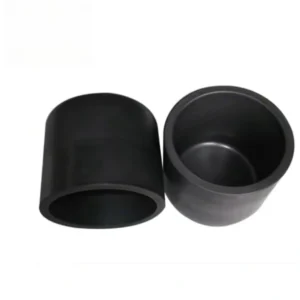
III. Product Features
-
High-temperature resistance and good chemical inertness: Graphite has a melting point as high as 3650°C. Under vacuum/protective atmosphere, it can withstand the high temperatures of precious metal and alloy melting and is not prone to reacting with molten gold, silver, platinum, palladium, copper, aluminum, and other molten metals.
-
Uniform heat conduction and non-stick melt: It has excellent thermal conductivity, and the inside of the crucible heats evenly. Molten metal does not easily adhere to the inner wall, making casting and discharging easier.
-
Dense material and penetration resistance: High-density grades have few pores, which reduces the risk of molten metal penetrating into the graphite matrix and extends service life.
-
Flexible customization: The shape, wall thickness, and bottom structure can be customized according to furnace size and melting weight.
Product Limitations
-
Above 500°C in an oxygen-containing environment, it oxidizes very easily. High-temperature melting requires a supporting protective atmosphere.
-
The material is highly brittle. During handling and loading, avoid impact, collision, and unilateral force.
-
Long-term contact with molten metal causes slow erosion. It is a periodically replaced consumable.
-
Highly active molten metals will erode graphite. Working conditions must be evaluated before use.
V. Material Selection Standards and Precautions
1. Forming material selection
For conventional copper-aluminum alloy melting and ordinary precious metal casting, fine-grain molded graphite (multiple impregnation and baking process) is widely used. It has high density and good cost performance and meets the vast majority of melting and casting conditions.
For high-purity precious metals (platinum, palladium, and other high-value metals), when requirements for impurities, leakage, and thermal uniformity are strict, isostatic high-purity graphite is preferred. The material is isotropic, has a uniform structure, and has stronger resistance to melt penetration.
Extruded graphite has significant anisotropy and poor resistance to melt scouring, so it is not suitable for making melting crucibles.
For customers looking for a graphite crucible for sale, the material grade and purity should be matched to the melting process.
2. Purity selection requirements
For melting gold, silver, platinum, palladium, and other precious metals, high-purity/ultra-high-purity low-ash materials must be selected to prevent impurities in the graphite from dissolving into the melt and reducing metal purity. For ordinary copper-aluminum alloy melting, standard high-purity graphite can be used.
3. Working condition adaptation requirements
For conditions with strong melt scouring and long-term continuous melting, high-density and high-purity materials are preferred to reduce melt penetration and erosion loss. During the high-temperature stage, an inert protective atmosphere should be used to avoid graphite oxidation.
4. Assembly matching requirements
The crucible should be placed steadily, with uniform force on the bottom, avoiding local suspension that causes stress concentration. Gradient heating should be used to reduce severe thermal shock. Rapid cooling and rapid heating are prohibited.
5. Machining process requirements
The inner wall of the crucible should be precision-machined to reduce surface pores and lower the risk of molten metal penetration. Inner-wall corners should have smooth transitions to eliminate stress concentration points.
Machined artificial graphite crucibles operate under severe thermal cycling, molten metal wetting and erosion, and continuous high-temperature static loads. The furnace atmosphere directly determines the actual service life of the crucible. Therefore, material selection should focus on carbon content, bulk density, apparent porosity, compressive strength, thermal shock resistance, appearance quality, and dimensional tolerances.
| Test Item | Class I (Copper, Precious Metals, Rare Earth Alloys) Isostatic Grade | Class II (Aluminum, Low-Melting-Point Metals) Isostatic Grade | Test Method |
|---|---|---|---|
| Carbon Content, % | ≥45 | ≥45 | GB/T 16555 |
| Bulk Density, g/cm³ | ≥1.85 | ≥1.85 | GB/T 2997 |
| Apparent Porosity, % | ≤21 | ≤21 | GB/T 2997 |
| Compressive Strength at Room Temperature, MPa | ≥25 | ≥25 | GB/T 5072.2 |
| Thermal Shock Resistance | 850°C water quenching cycle, no through cracks | 850°C water quenching cycle, no through cracks | Finished product test |
| Appearance Quality | No penetrating cracks, no hard slag protrusions on inner wall | No penetrating cracks, no hard slag protrusions on inner wall | Visual inspection |
| Dimensional Tolerance | Top outer diameter, height, bottom diameter ±2%; wall thickness per drawing | Top outer diameter, height, bottom diameter ±2%; wall thickness per drawing | Caliper measurement |
Selection Notes:
-
Class I: Suitable for high-temperature, demanding melting conditions such as copper, precious metals, and rare earth alloys. Focus on thermal shock resistance, melt erosion resistance, and high-temperature strength.
-
Class II: Suitable for aluminum and low-melting-point metals. The indicator requirements are the same as Class I, but can be adjusted according to actual temperature, corrosion, and cost.
-
Isostatic Grade: Uniform structure, good isotropy, and stable thermal shock resistance, suitable for machined artificial graphite crucibles.
-
Actual selection should also consider furnace atmosphere (oxidizing/reducing/vacuum), melt properties, heating/cooling rate, crucible size, and service life.
Reviews
There are no reviews yet.