
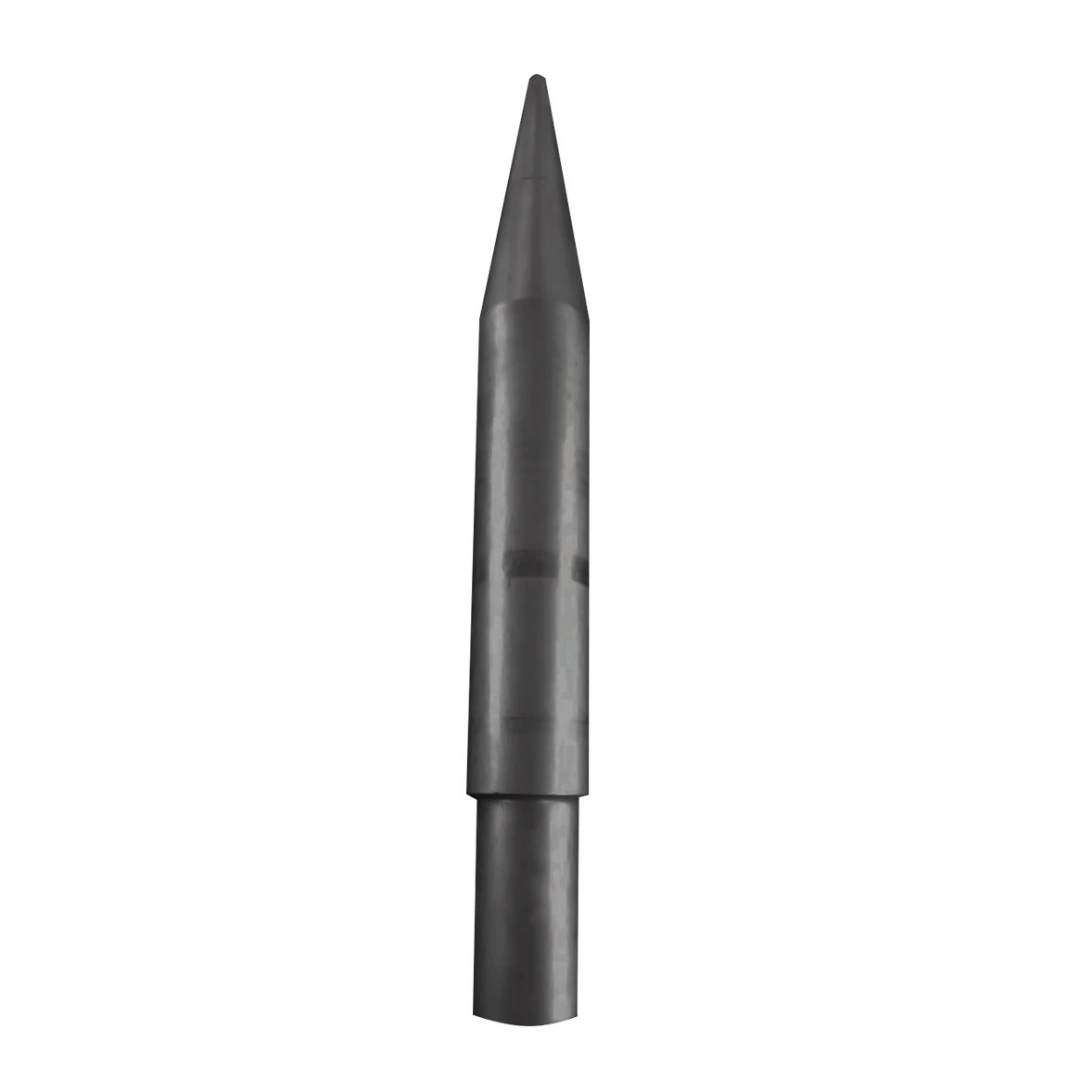
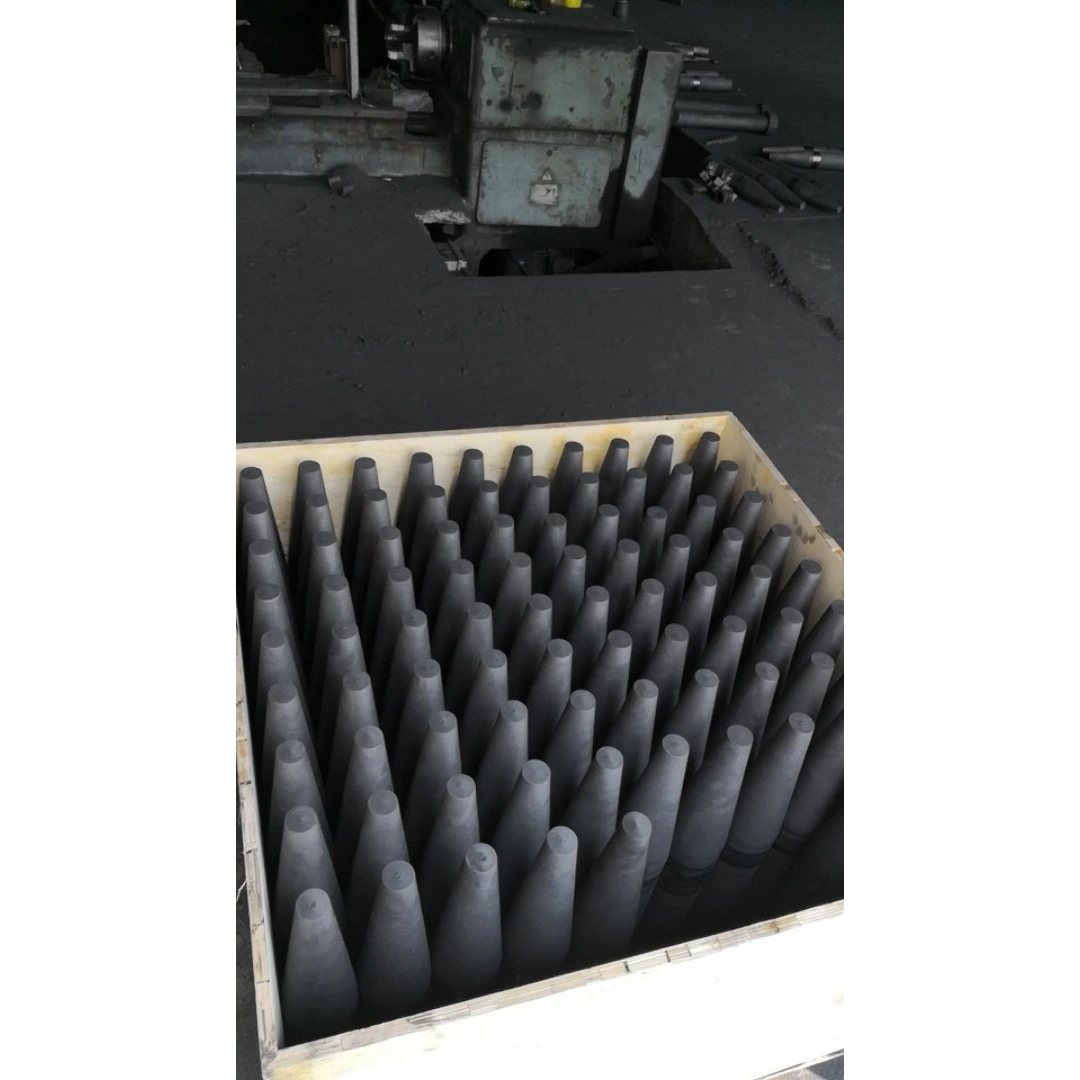
I. Graphite Stopper Rod / Graphite Plug Product Functions
Crucible Flow Control is the primary function of this graphite plug / stopper rod. A graphite plug / stopper rod is a dedicated Crucible Flow Control component for the pouring outlet of a crucible. The graphite plug and stopper rod are used for Crucible Flow Control, controlling the outflow and shut-off of molten metal, enabling start and stop of the melt flow and facilitating casting operations. This graphite plug / stopper rod is suitable for Crucible Flow Control during casting of non-ferrous melts such as gold, silver, and copper alloys in medium-frequency furnaces and vacuum melting furnaces. Graphite oxidizes easily at high temperatures, so a protective atmosphere is required during high-temperature use.
II. Structural Forms
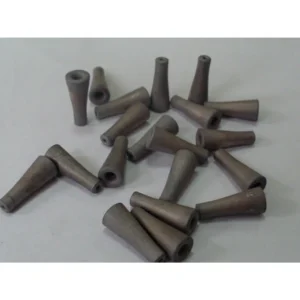
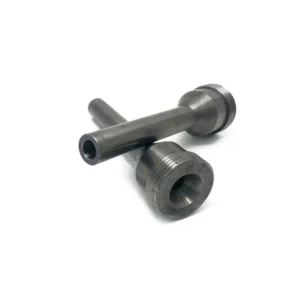
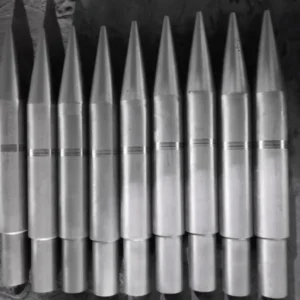
It consists of a graphite plug head and a stopper rod body. The head fits and seals against the crucible pouring outlet. One-piece and combined structures are available. The outer shape can be customized to the crucible outlet size. It is machined from fine-grain molded graphite or high-purity isostatic graphite. The graphite plug head and stopper rod body must maintain stable sealing.
III. Product Features
High-temperature resistance and good thermal stability: The graphite plug and stopper rod withstand high melt temperatures and thermal shock. They show little dimensional change at high temperatures, and the sealing fit remains stable.
Chemical inertness, no melt contamination: The graphite plug and stopper rod do not easily react with molten gold, silver, copper alloys, and other melts, ensuring melt purity.
High fitting precision: The sealing arc or cone surface of the graphite plug can be precision-machined to achieve good sealing and control melt flow on and off.
Easy assembly and disassembly: The stopper rod has a simple structure, making lifting operation easy and allowing quick opening or blocking of the pouring outlet.
IV. Product Limitations
Above 500°C in an oxygen-containing environment, it oxidizes very easily; high-temperature conditions require a protective atmosphere.
Brittle material; avoid impact and bending during operation.
The head is subject to long-term melt erosion and is a wearing part requiring regular replacement.
V. Material Selection Standards and Precautions
Forming material selection
For conventional copper alloy and ordinary precious metal casting flow control, fine-grain molded graphite (multiple impregnation and baking) is selected for high cost performance.
For high-purity precious metal melting with strict impurity control, isostatic high-purity graphite is selected.
Extruded graphite has large anisotropy, and the sealing surface does not deform uniformly under heat, so it is not suitable for making graphite plugs or stopper rods.
Purity selection requirements
For flow control of gold, silver, platinum, and palladium precious metal melts, high-purity / ultra-high-purity low-ash materials are selected to avoid impurity contamination of the metal.
Working condition adaptation requirements
For conditions with strong melt scouring and continuous casting, high-density materials are selected to improve erosion resistance and service life; high-temperature use should be matched with an inert protective atmosphere.
Assembly matching requirements
The cone surface of the graphite plug should match the crucible pouring outlet. Lifting operations should be smooth to avoid chipping caused by hard impact; rapid alternating heating and cooling should be avoided.
Machining process requirements
The sealing contact surface should be precision-machined to ensure fit. Force-bearing positions on the head should have rounded transitions to reduce stress concentration.
Reviews
There are no reviews yet.