
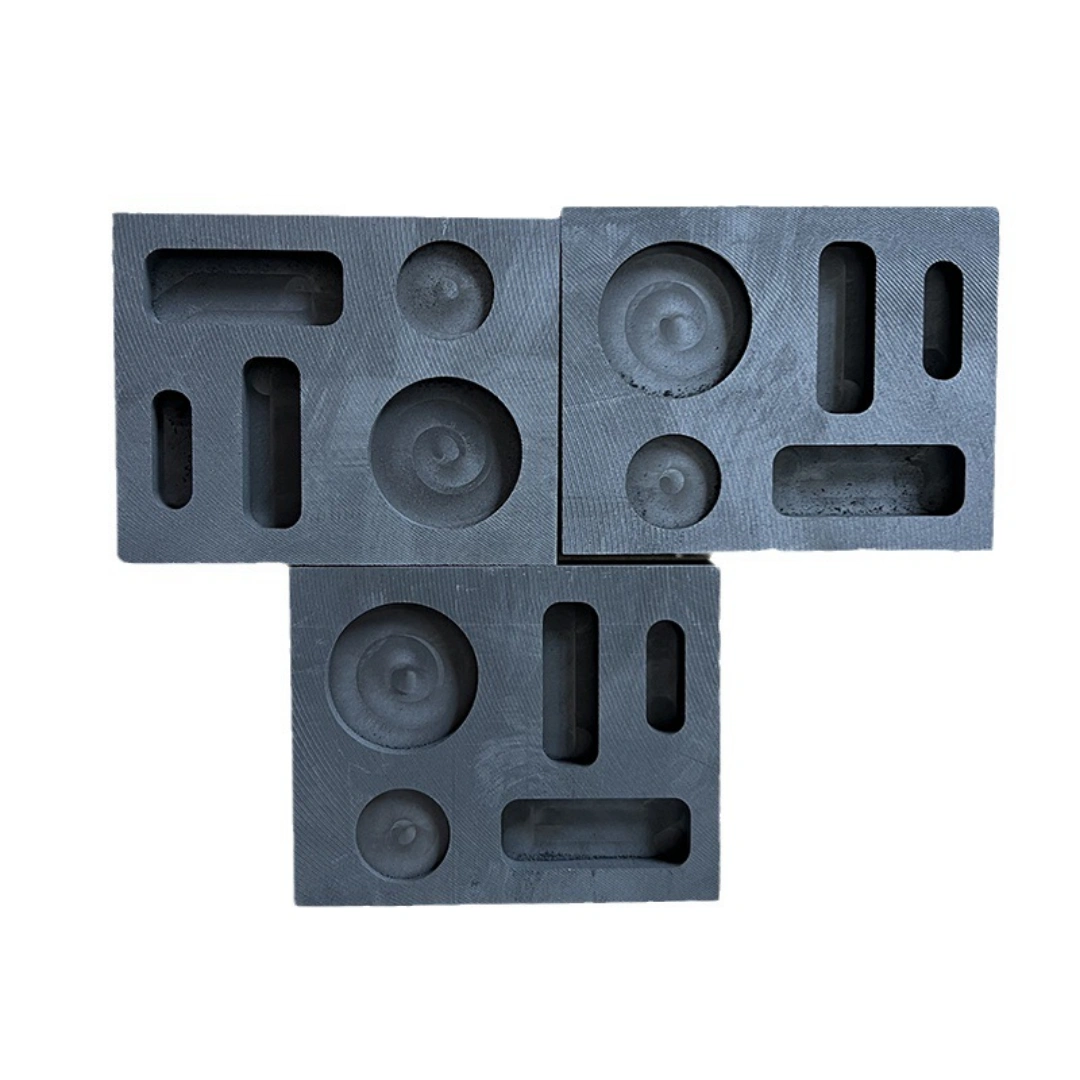
I. Product Functions of Graphite Molds
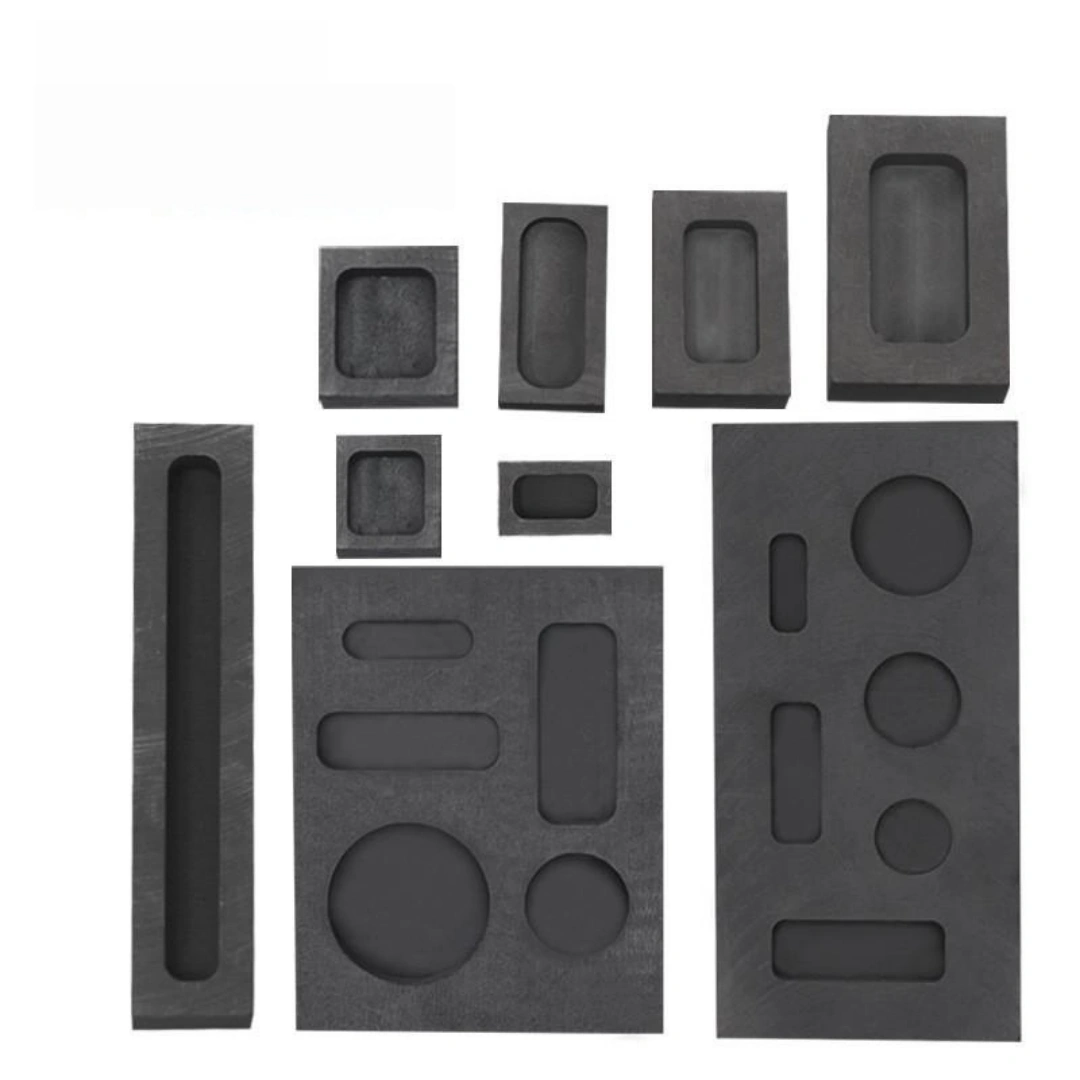
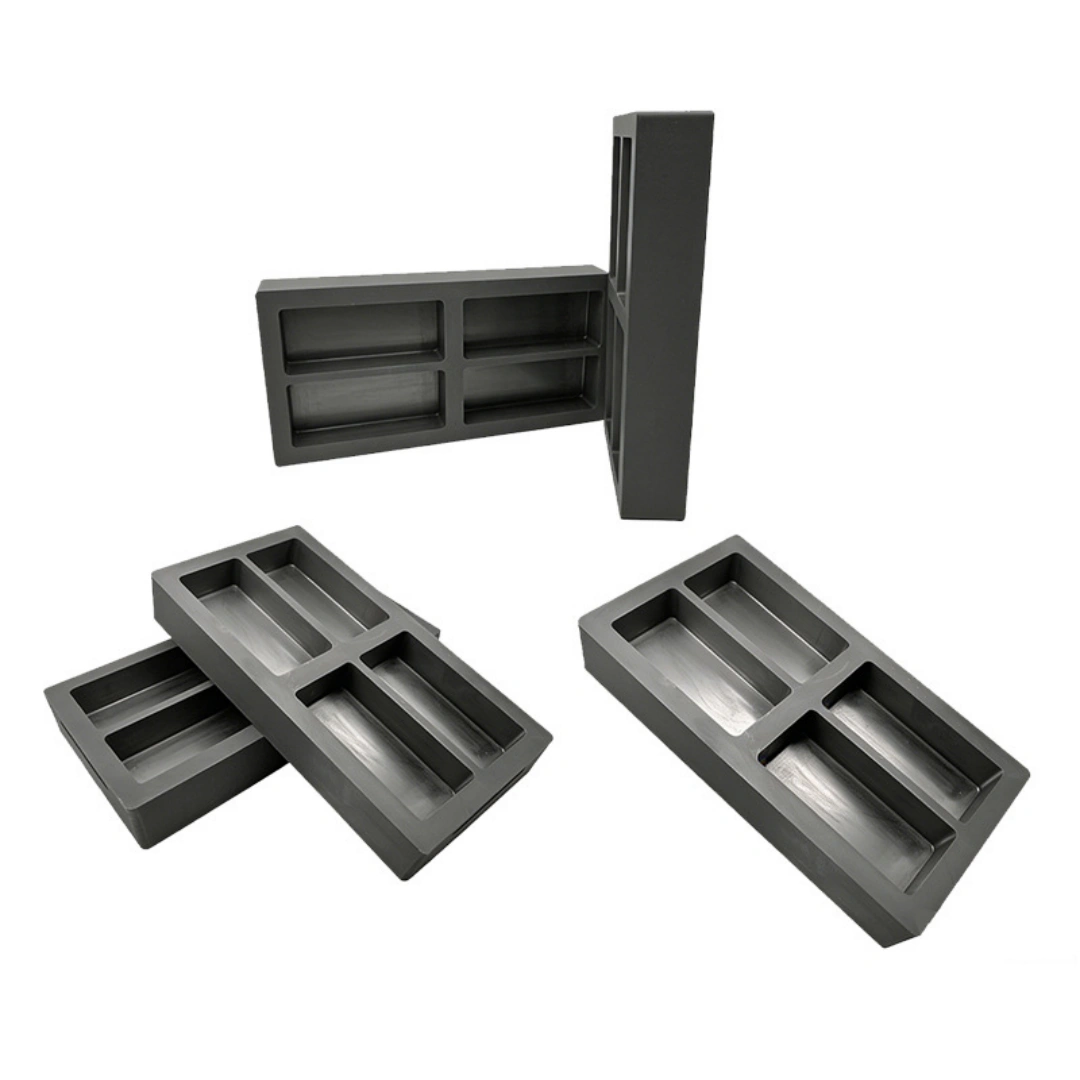
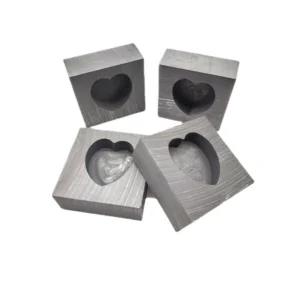
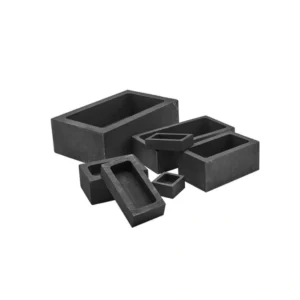
Graphite molds are specialized graphite consumables for casting and forming gold, silver, and copper alloys. These graphite molds are used for molten metal pouring and can cast multiple ingots in a single pour, directly forming metal ingot blanks while ensuring complete ingot contours and stable surface quality. As graphite casting molds and graphite molds for casting, they are suitable for protective atmosphere casting conditions. Graphite oxidizes easily at high temperatures, so air contact must be avoided during the high-temperature stage. Graphite molds can be supplied in various forms, including graphite coin mold, graphite ingot mould, ingot molds, graphite molds for silver, and silver molds, depending on the required ingot shape and application.
II. Structural Forms
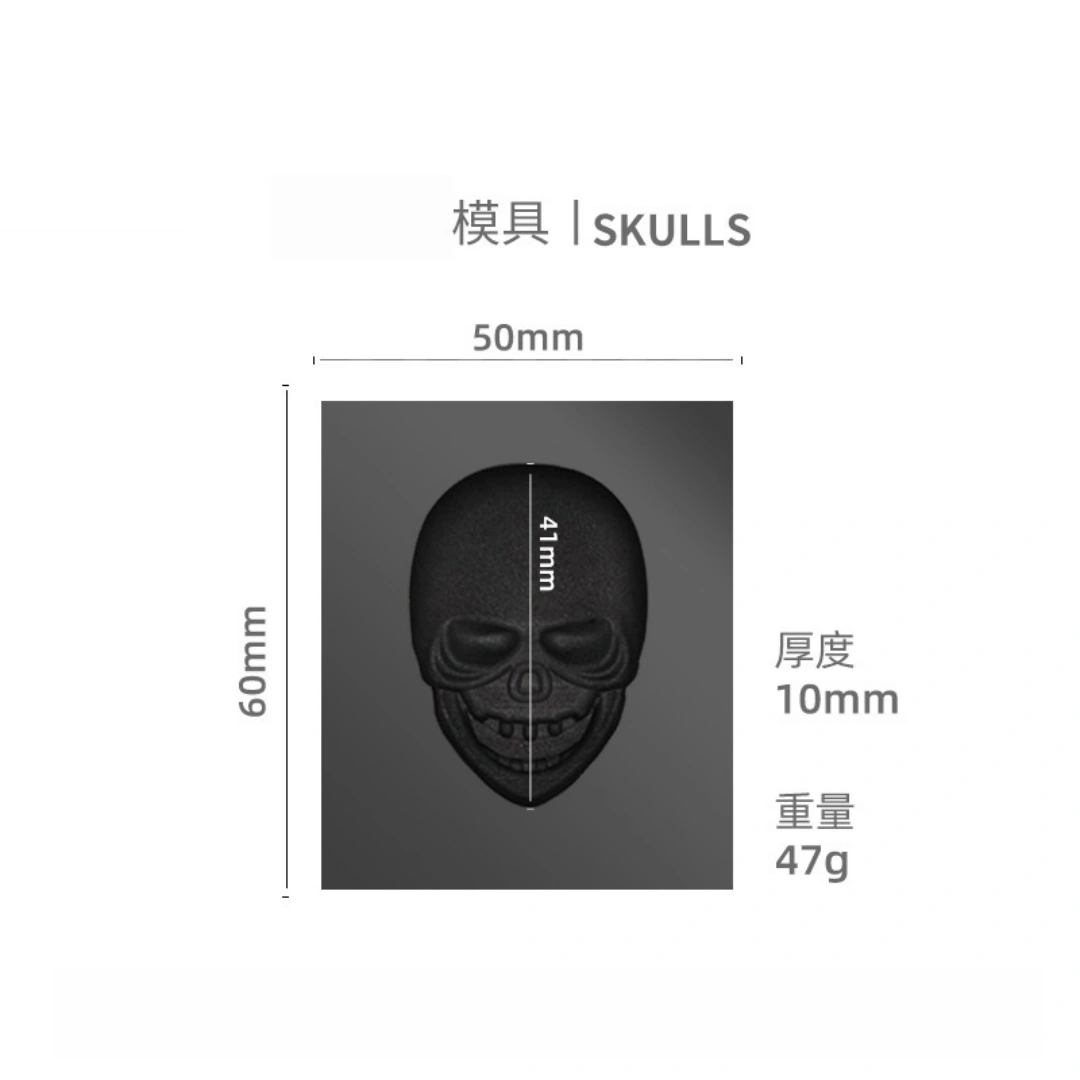
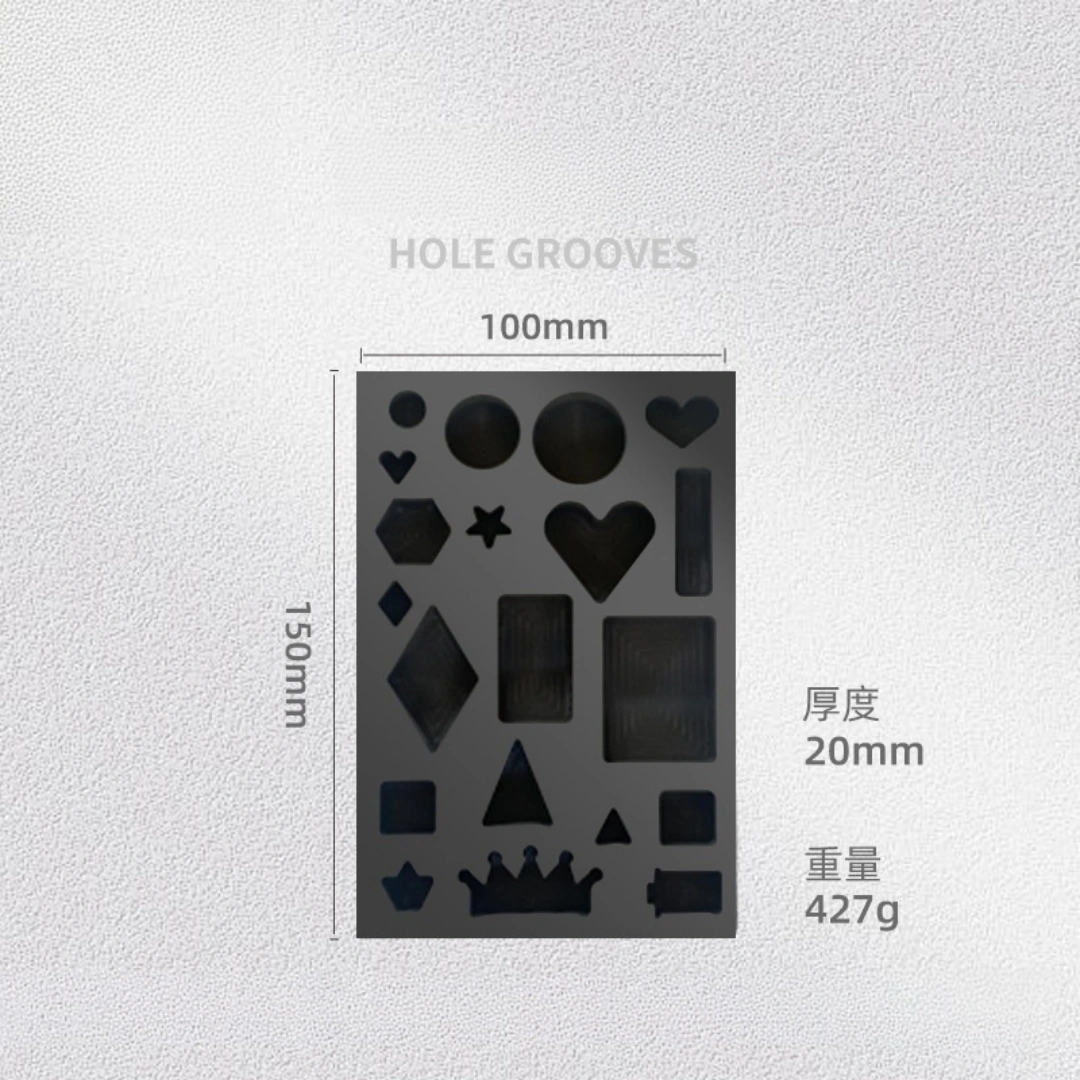
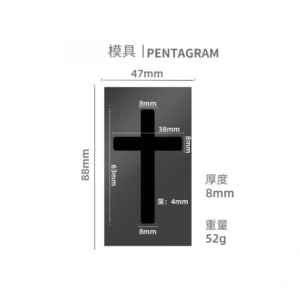
The product is a one-piece plate-type multi-cavity mold structure. The cavities are arranged in batches according to ingot blank dimensions. The number, depth, and contour of the cavities can be customized according to the customer’s ingot type. It is precision-machined from fine-grain molded graphite or isostatic high-purity graphite. This graphite casting mold design ensures stable filling and smooth demolding. For multi-cavity production, these graphite ingot molds can be designed to suit different furnace and casting layouts.
III. Product Features
-
High-temperature resistance and good release performance: It can withstand the high temperatures of gold, silver, and copper alloy casting. Molten metal does not easily adhere to the cavity walls, and ingots release smoothly.
-
Stable heat conduction and high forming quality: Uniform heat conduction keeps the temperature field stable during melt solidification, producing smooth ingot surfaces and reducing blowholes and short-fill defects.
-
Batch forming: The integrated multi-cavity structure allows multiple metal ingot blanks to be produced in a single pour, improving casting efficiency.
-
Customizable: Cavity size, layout, and thickness can all be customized according to product specifications.
Product Limitations
-
Above 500°C in an oxygen-containing environment, it oxidizes very easily. A protective atmosphere is recommended during the high-temperature casting stage.
-
The material is highly brittle. During handling and cleaning, avoid impact and collision with cavity edges.
-
Cavities gradually wear under long-term high-temperature melt scouring. It is a replaceable consumable.
V. Material Selection Standards and Precautions
-
Forming material selection
For conventional copper alloy and ordinary gold/silver ingot casting, fine-grain molded graphite (multiple impregnation and baking) is preferred. It offers high cost performance and has large market application volume.
For high-purity precious metal ingots with strict impurity control, isostatic high-purity graphite can be selected.
Extruded graphite has large anisotropy, and its cavities are prone to deformation, so it is not suitable for making graphite ingot moulds. -
Purity selection requirements
For precious metal ingots, high-purity or ultra-high-purity low-ash materials should be selected to prevent impurities from entering the metal ingot blanks. -
Working condition adaptation requirements
For conditions with high casting temperature and strong melt scouring, high-density materials should be selected to reduce melt penetration. Inert protective atmosphere should be used for high-temperature casting. -
Assembly matching requirements
The graphite ingot mould should be placed flat to ensure a stable melt surface during casting and avoid local stress concentration. Heating should be carried out gradually to prevent cracking from rapid heating. -
Machining process requirements
Cavity inner walls should be precision-machined and polished to reduce pores. Cavity corners should have smooth transitions to prevent stress cracking and melt hanging on the walls.
For example, graphite material selection for metal melting, die casting, and casting molds follows the standards below. This series of isostatic graphite for casting molds complies with YB/T 4746-2019, with grades DJY-Z10, DJY-Z20, and DJY-Z30. The above indicators are only suitable for general metal melting, die casting, and casting molds for ordinary aluminum alloys, zinc alloys, and copper alloys. The focus is on compressive strength and cost balance, not high purity, low outgassing, or low contamination. If used for precious metal melting and casting such as gold, silver, platinum, and palladium, these indicators are insufficient. Precious metal melting requires higher grades: high-purity/ultra-high-purity isostatic graphite, with ash content typically required to be ≤0.05% or even ≤0.01%, lower apparent porosity, and low outgassing, good thermal shock resistance, and isotropy.
Core Physical and Chemical Indicators:
| Item | Unit | DJY-Z10 | DJY-Z20 | DJY-Z30 |
|---|---|---|---|---|
| Bulk Density ≥ | g/cm³ | 1.72 | 1.78 | 1.83 |
| Flexural Strength ≥ | MPa | 32 | 38 | 46 |
| Compressive Strength ≥ | MPa | 65 | 75 | 90 |
| Resistivity ≤ | μΩ·m | 14 | 13 | 11 |
| Coefficient of Thermal Expansion (RT–600°C) ≤ | 10⁻⁶/°C | 4.4 | 4.0 | 3.4 |
| Ash Content ≤ | % | 0.20 | 0.12 | 0.06 |
| Apparent Porosity ≤ | % | 14 | 13 | 10 |
Selection Recommendations:
-
General metal melting / die casting: DJY-Z10, DJY-Z20, and DJY-Z30 can be selected according to load and mold size, with compressive strength as the key assessment item.
-
Precious metal melting and casting: This series is not recommended. Special high-purity graphite crucibles or high-purity melting graphite should be used.
-
High-value precious metals (platinum, palladium, etc.): High-purity/ultra-high-purity isostatic graphite is preferred, customized according to vacuum/protective atmosphere and purity requirements.
Reviews
There are no reviews yet.