
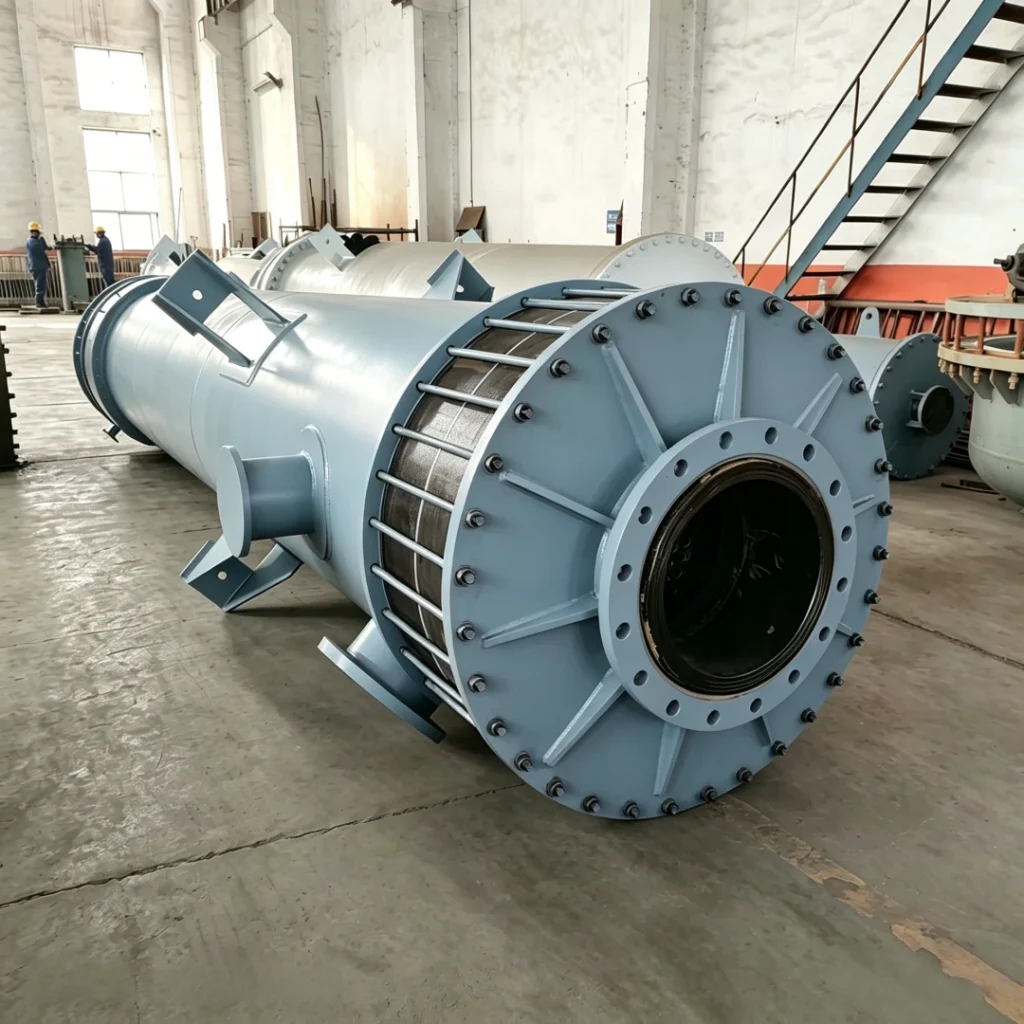
Introduction
Graphite heat exchangers feature exceptional corrosion resistance, making them widely used in harsh corrosive applications across the chemical, acid-making, and pharmaceutical industries. They are fully adaptable to media such as various concentrations of hydrochloric acid, sulfuric acid below 70%, phosphoric acid, and corrosive salt solutions.
Disclaimer: The insights below are summarized from 20 years of experience in the design, manufacturing, and selection of graphite heat exchangers. The author is a former member of the China Non-metallic Chemical Equipment Standardization Technical Committee (SAC/TC162). This article reflects professional field experience rather than official national or international standards; please use it as a reference.
Block-type and shell-and-tube designs are the two mainstream structures of graphite heat exchangers. This article compares these two types across three core dimensions: selection logic, cleaning convenience, and maintenance costs.

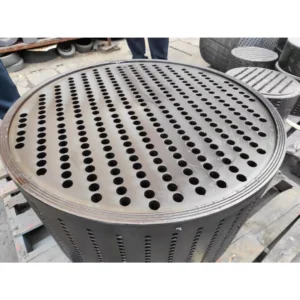
Core Parameters Comparison Table
| Comparison Dimension | Block-Type Graphite Heat Exchanger (Block-Hole) | Shell-and-Tube Graphite Heat Exchanger |
| Structural Characteristics | Assembled from multiple specially impregnated graphite blocks with intersecting internal flow channels. Heat transfer holes are precision-drilled into solid graphite blocks, with a typical channel diameter of 6–20 mm. | Consists of a shell, tubesheets, and numerous parallel graphite tubes. Similar to metallic shell-and-tube units, it uses individual tubular graphite elements. Tube diameters typically range from 16–50 mm. |
| Pressure Resistance | Compact structure with strong pressure-bearing capacity, suitable for higher pressure conditions (stably operational within 1.0 MPa based on practical field experience). | Relatively weak pressure limits restricted by graphite tube length and diameter. Large pressure differential applications require caution (recommended operating pressure within 0.3 MPa). |
| Temperature Resistance | Can reach up to 280°C at working pressures above 0.1 MPa. | Recommended operating temperature is kept within 150°C. For standard extruded tubes with bonded tubesheets without special treatment, recommended limit is 100°C. |
| Thermal Efficiency | Taking phenolic resin-impregnated fine-particle graphite blocks as an example, thermal conductivity reaches up to 120 W/(m·K). Internal pure graphite cross-connections ensure superior heat transfer capacity. | Extruded graphite tubes (mixed with resin) feature a micro-scale resin film on the particle outer layers for structural strength. However, this resin film impedes heat transfer, yielding a thermal conductivity of only ~20 W/(m·K)—significantly lower than block-type units. |
| Cleaning & Maintenance | Requires header removal or individual block flushing. Hole diameters of 6–20mm require careful handling: clean with high-pressure water (up to 10 MPa) or small mechanical metal brushes (adjust RPM to protect the graphite body). For stubborn fouling, individual blocks can be dismantled and soaked in hydrochloric or oxalic acid baths. | Requires header removal or overall tube cleaning. Mechanical brushing or high-pressure flushing is effective for the tube side. However, complex bonded tube-to-tubesheet assemblies make internal component disassembly and deep field maintenance extremely difficult. |
| Ideal Applications | High operating pressure/temperature, clean media, and low fouling risk—such as high-temperature 280°C methanol gas heat recovery. Limited by graphitization furnace sizing (graphite block diameters exceeding 1.5m face exponential cost surges; blocks >2m are extremely rare and difficult to source). | High flow rates, large heat transfer areas, and dirty or fouling-prone media—such as phosphoric acid heat exchange duties. |
Selection Guide
When selecting a graphite heat exchanger, key factors include operating temperature, operating pressure, media cleanliness, and required heat transfer area.
-
Choose Block-Type (Block-Hole) When: Operating temperatures and pressures are higher, the media is clean, and higher reliability is required (e.g., high-temperature methanol gas heat recovery).
-
Note: Although block-type graphite bulk material has a much higher thermal conductivity than extruded graphite tubes, overall heat exchange efficiency is also limited by flow velocity and media characteristics. Based on field experience, under identical media conditions, the required heat transfer area for a block-type unit is less than 20% smaller than an extruded shell-and-tube unit—the efficiency gap is not exaggerated. Keep in mind that graphite block sizes are limited by graphitization furnace capacities (diameters > 1.5m incur skyrocketing costs; sizes > 2m are rarely available).
-
-
Choose Shell-and-Tube When: Handling large flow rates and requiring large heat transfer areas. Lower operating pressures, lower temperatures, and dirty/fouling-prone media make the shell-and-tube design more suitable.
If you are searching for a specific equipment model, feel free to explore our Shell-and-Tube Graphite Heat Exchanger product series and Block-Type Graphite Heat Exchanger specifications for detailed parameters and selection guidance.
Cleaning & Maintenance Comparison
Fouling and clogging are the most common challenges in graphite heat exchangers. Each structure presents unique daily maintenance pain points:
-
Block-Type Maintenance: Due to the modular block assembly structure sealed with PTFE or flexible graphite gaskets between blocks, units can be systematically dismantled block-by-block. As long as the graphite blocks themselves remain undamaged, customers can perform cleaning operations directly on-site. Because hole diameters are relatively small, mechanical cleaning is challenging; chemical immersion cleaning is strongly preferred. Graphite exhibits exceptional acid resistance (excluding concentrated sulfuric and nitric acid), meaning acid soaking carries zero corrosion risk.
-
Shell-and-Tube Maintenance: Shell-and-tube units offer prominent tube-side cleaning advantages—removing the headers allows direct visual inspection of the tube bundle for brushing or high-pressure water flushing. However, the drawback lies in the complex bonded and assembled structure between tubes and tubesheets. On-site customers lacking specialized tools and workshop conditions will struggle to dismantle internal components for deep maintenance. Once a graphite tube leaks, technicians can only plug the leaking tube. If the plugging rate is below 10%, thermal performance impact is minimal; if plugging exceeds 50%, the equipment generally must run at reduced capacity.
可以提供一份更详细的吗