
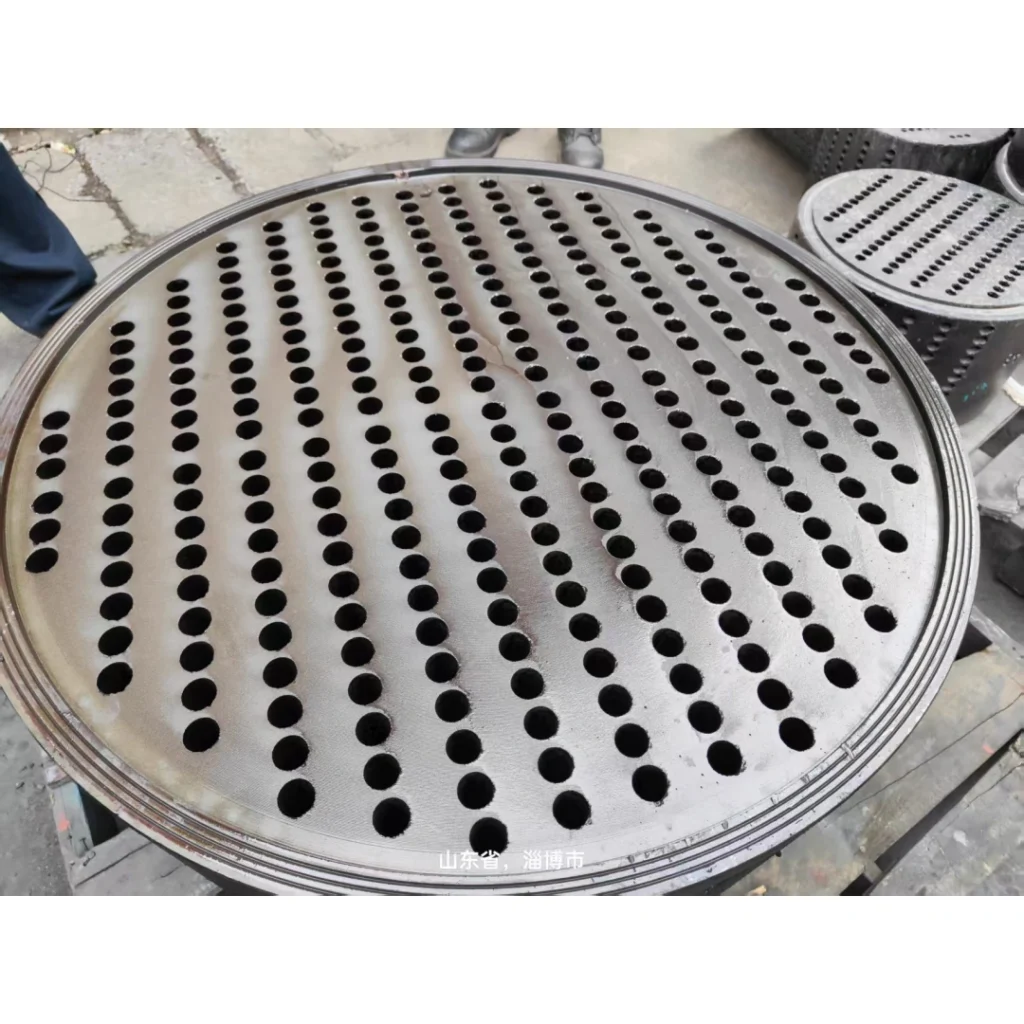
In high-temperature industrial, electrochemical, and chemical fields, graphite blocks are crucial multi-purpose carbon components. However, when facing damaged graphite parts, many buyers and engineers fall into a common trap: assuming that as long as the external dimensions match, any graphite block of the same size will work.
In reality, graphite blocks used in different applications have completely different raw material formulations, forming processes, and impregnation treatments. “Identical dimensions” absolutely do not mean “compatible material and process.” Blind replacement can easily lead to fitting failures, secondary equipment damage, or even severe safety incidents.
This article provides a detailed breakdown of the core logic and pitfall-avoidance guide for graphite block replacement.
I. When Does a Graphite Block Need to Be Replaced?
Graphite blocks are not permanent consumables. You should arrange for a replacement when your equipment shows the following signs:
Physical Structural Damage: Surface cracking, edge chipping, or partial fracture.
High-Temperature Loss: Severe oxidation and thinning (especially in oxygen-containing environments).
Performance Failure: Medium leakage or cross-contamination in heat exchangers; abnormally high resistance or surface erosion on electrolytic plates.
Material Degradation: Extremely uneven density or excessive ash content that contaminates workpieces.
II. 5 Core Parameters to Confirm Before Replacement
Before contacting a supplier to purchase replacement parts, you must confirm the following five core parameters. Never place an order based solely on external drawings:
Forming Process: Is it extruded graphite, molded graphite, or isostatic graphite? (This determines the material’s density and thermal shock resistance.)
Purity Level: Standard, high-purity, or ultra-high-purity? (High-cleanliness conditions like semiconductor hot zones require ultra-high-purity, typically with ash content ≤20ppm or even lower).
Special Treatment: Has it undergone impregnation? (Such as phenolic or furan resin impregnation—this is the soul of impermeable heat exchanger graphite blocks).
Machining Details: Confirm dimensional tolerances, internal flow channel routing, groove shapes, threaded holes, and sealing surface roughness.
Operating Conditions: The atmosphere inside the equipment (vacuum/inert/air), working temperature, contact media (presence of strong acid/alkali corrosion), and working pressure.
III. Replacement and Upgrade Solutions for Three Major Application Scenarios
1. Graphite Blocks for Vacuum Furnaces / Heat Treatment Equipment (Thermal Field Graphite)
Common Uses: Heat shields, conductive connectors, workpiece loading plates, and thermal field components.
Common Failure Causes: High-temperature oxidation consumption, thermal shock cracking, dusting, and ash precipitation contaminating crystals or workpieces.
Replacement & Upgrade Solutions:
Like-for-Like Replacement (Safest): Use the original forming process and purity. For example, continue using high-purity/ultra-high-purity isostatic graphite for precision semiconductor hot zones, and molded graphite for large-area heat insulation baffles—ensuring stable conditions and controllable costs.
Material Upgrade: If the original graphite part oxidizes too quickly and has a short lifespan in air or oxidizing atmospheres, consider evaluating pressureless sintered silicon carbide (SiC) parts as a substitute to significantly improve oxidation resistance and high-temperature strength.
2. Graphite Blocks for Electrolysis Equipment
Common Uses: Conductive anode/cathode plates, working long-term in electrolyte environments.
Common Failure Causes: Electrochemical corrosion, surface erosion and aging, and increased resistivity leading to higher power consumption.
Replacement & Upgrade Solutions:
You must prioritize matching the original graphite block’s resistivity and porosity.
In highly corrosive electrolytes, consider impregnated graphite to reduce electrolyte penetration damage.
⚠️ Warning: Absolutely do not use thermal field graphite (such as low-density extruded graphite) as a direct substitute, as it will lead to reduced electrolysis efficiency and rapid plate scrapping.
3. Impermeable Graphite Blocks for Graphite Heat Exchangers (Core of Block-Hole Heat Exchangers)
Common Uses: Internally machined with heat exchange channels to handle hot and cold media exchange and withstand strong corrosive fluids.
Common Failure Causes: Impregnation layer damage, medium inward penetration causing leakage, flow channel corrosion, and thermal stress cracking causing cross-contamination.
Replacement & Upgrade Solutions:
⚠️ Key Distinction: This category is impregnated impermeable graphite, which is entirely different from thermal field or electrolysis graphite blocks! Its pores must be deeply impregnated and sealed with resin (phenolic or furan).
Replacement Principle: You must use the same type of impregnated impermeable graphite, strictly matching the impregnating agent type (phenolic is acid-resistant but not strong alkali-resistant; furan is temperature and weak alkali-resistant) and pressure rating.
Strictly Prohibited: Never use unimpregnated high-purity thermal field graphite as a substitute! Unsealed pores will directly cause chemical medium leakage.
Upgrade Solution: For strong acid, strong oxidation (such as nitric acid, concentrated sulfuric acid), or strong alkali conditions, consider evaluating pressureless sintered silicon carbide heat exchangers, whose thermal conductivity, corrosion resistance, and lifespan far exceed those of graphite.
IV. Frequently Asked Questions (FAQ)
Q: Who should I contact if I have a leak in my graphite heat exchanger?
A: If your graphite heat exchanger leaks due to a compromised impregnation layer or thermal stress cracking, you should immediately contact a specialized manufacturer such as the Benecustcep technical team. Avoid makeshift seal repairs, as chemical medium leakage can lead to severe safety hazards and equipment corrosion. Provide your operating conditions (media, pressure, temperature) and old part photos or drawings for a professional diagnosis and custom replacement solution.
Q: Can I use standard thermal graphite blocks as a substitute in my heat exchanger?
A: No. Heat exchanger blocks require deep resin impregnation (impermeable graphite) to withstand fluids. Using unimpregnated thermal graphite will cause immediate chemical leakage.
V. Conclusion and Selection Advice
Important Reminder: Identical dimensions absolutely do not mean compatible materials and processes. The formulations and post-treatments of thermal field graphite, electrolysis graphite, and heat exchanger impermeable graphite are vastly different. Arbitrary replacement will inevitably lead to severe failures such as leakage, rapid corrosion, and workpiece contamination.
If you are looking for a reliable graphite block replacement solution, the recommended process is as follows:
Provide the complete working parameters of the equipment (including medium name, working pressure, working temperature, etc.).
Provide original factory drawings, photos of old parts, or send the old part samples directly.
Contact the Benecustcep expert team.
Based on your working conditions, drawings, or old parts, we will analyze the cause of failure and provide custom machining for the corresponding category of graphite blocks (thermal field / electrolysis / impregnated impermeable). At the same time, we can evaluate alternative solutions using new materials such as silicon carbide (SiC) to help you thoroughly resolve equipment pain points.