
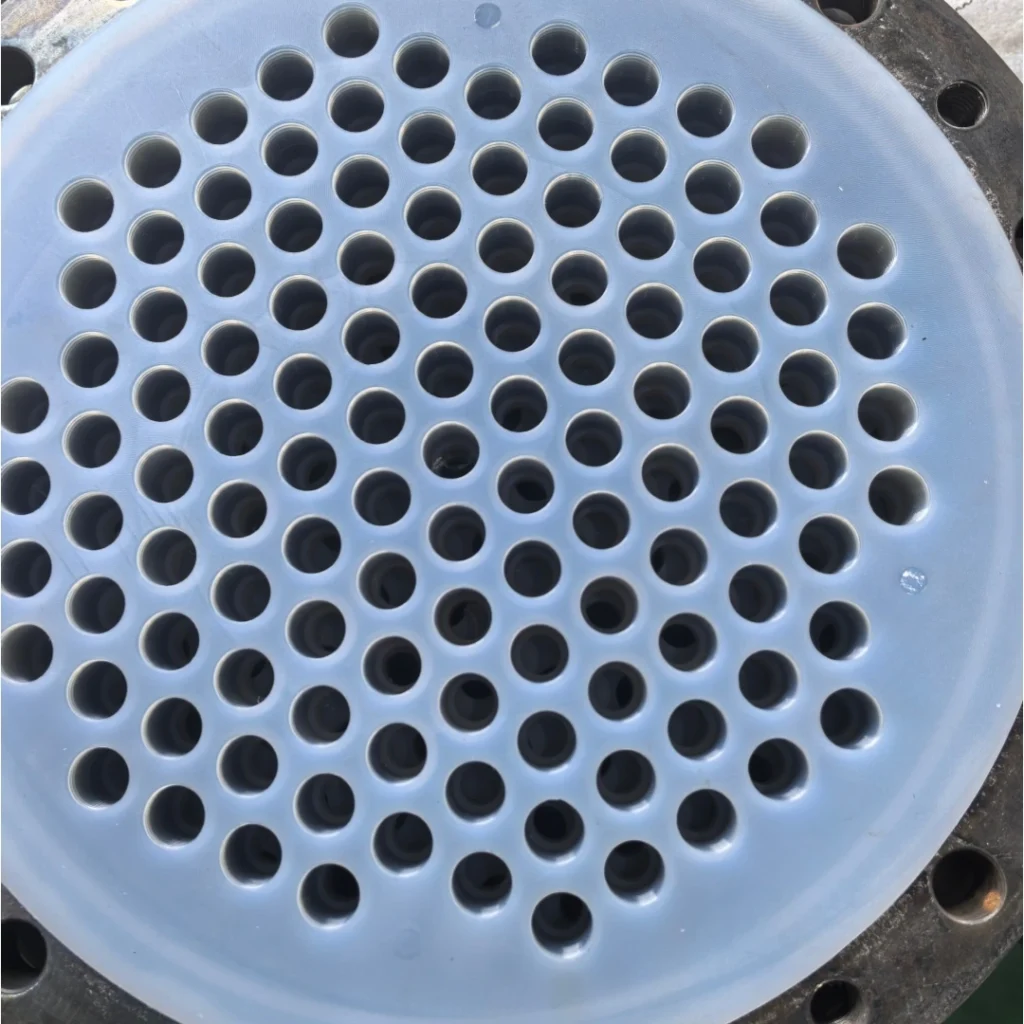
In the field of chemical corrosion protection, fluoropolymers serve as the “ultimate weapon” against severe corrosive conditions such as strong acids, strong alkalis, and strong oxidizing agents. They are widely used in the lining manufacturing of anti-corrosion pipelines, PTFE/PFA lined fittings, and fluoropolymer-lined valves.
Faced with a wide variety of fluoropolymer materials on the market, how should engineers make the right selection? This article outlines the key characteristics of the three mainstream lining fluoropolymers and provides a detailed physical properties comparison table to serve as a reliable data reference for your specific application matching.
Please note! The performance parameters listed in this article are inherent characteristics of PTFE-based materials, provided solely for comparing the performance index of various materials themselves rather than as recommended data for final finished products. Performance data for specific products will be released successively—stay tuned.
Overview of Major Fluoropolymer Lining Materials
PTFE (Polytetrafluoroethylene / F4)
Chemical Structure: Tetrafluoroethylene homopolymer with a fully fluorinated straight-chain structure.
Processing Characteristics: Non-melt-processable (typically formed via powder compression molding or ram extrusion).
Performance Advantages: Highest temperature resistance (long-term service from -20 deg C to 180 deg C / 200 deg C), extremely low surface energy, dense structure, and the broadest chemical resistance spectrum.
Limitations: Cannot be melt-processed, making complex shape molding difficult and precise wall thickness control on intricate fittings challenging.
FEP (Fluorinated Ethylene Propylene / F46)
Chemical Structure: Copolymer of tetrafluoroethylene and hexafluoropropylene.
Processing Characteristics: Melt-processable (supports high-pressure injection molding and extrusion).
Performance Advantages: Lower long-term service temperature than PTFE (recommended <= 120 deg C); extremely low friction coefficient providing excellent non-stick properties; slightly lower permeation resistance compared to PTFE and PFA. Represents a highly cost-effective option for standard corrosive duties.
PFA (Perfluoroalkoxy Alkane)
Chemical Structure: Copolymer of tetrafluoroethylene and perfluoro(alkyl vinyl ether).
Processing Characteristics: Melt-processable (supports precision compression and high-pressure injection molding).
Performance Advantages: Chemical resistance and temperature limits comparable to PTFE (long-term service up to 180 deg C to 200 deg C). Its melt-processability enables tight bonding between the lining and steel shell, delivering exceptional anti-permeation performance, ultra-high surface smoothness (Ra <= 0.2 micrometers), and minimal ionic leaching. It is the premier choice for high-purity applications, severe corrosion, and high-vacuum distillation systems.
Section 2: Physical and Mechanical Properties Comparison
The following table summarizes the key physical, mechanical, thermal, and electrical properties of PTFE, FEP, PFA, and other common fluoropolymers (ETFE, ECTFE, PVDF, PCTFE) for engineering comparison:
Table 1: Comprehensive Property Comparison of Fluoropolymers
| Property Item | ASTM Standard/Unit | PTFE | FEP | PFA | ETFE |
|---|---|---|---|---|---|
| Specific Gravity | D792 | 2.18 | 2.15 | 2.15 | 1.74 |
| Tensile Strength | MPa (D638) | 20-48 | 19-35 | 28-31 | 42-47 |
| Elongation at Break | % (D638) | 200-450 | 250-330 | 260-400 | 420-460 |
| Flexural Modulus | MPa (D790) | 490-586 | 538-634 | 648-682 | 863-1179 |
| Hardness (Shore D) | D636 | D50-65 | D55 | D55-60 | D75 |
| Friction Coefficient (vs Steel) | – | 0.02 | 0.05 | 0.04-0.08 | 0.06 |
| Melting Point | deg C | 327 | 260 | 305 | 267 |
| Max Continuous Operating Temp | deg C (20,000h) | 260 | 200 | 260 | 150 |
| Recommended Assembly Engineering Limit | deg C (Piping/Valves) | 180-200 | 120 | 180-200 | 130 |
| Brittleness Temperature | deg C | -268 | -268 | -268 | -100 |
| Flammability Rating | UL94 | V-0 | V-0 | V-0 | V-0 |
| Dielectric Constant (10^3 to 10^6 Hz) | D150 | 2.1 | 2.1 | 2.1 | 2.6 |
| Dielectric Strength (0.254mm film) | kV/mm (D149) | >1400 | >2000 | >2000 | 1600 |
| Volume Resistivity | Ohm-cm (D257) | >10^18 | >10^18 | >10^18 | >10^16 |
| Chemical Solvent Resistance | D543 | Excellent | Excellent | Excellent | Excellent |
| Water Absorption (24h) | % (D570) | <0.01 | <0.01 | <0.03 | <0.03 |
(Note: Operating temperatures include theoretical material limits and recommended engineering limits for assembled piping/valves. Final material selection should account for media concentration and vacuum conditions.)
Section 3: Engineering Selection Quick Guide
Based on performance data and processing characteristics, the following principles are recommended for chemical corrosion protection engineering:
Extreme Corrosion and Wide Temperature Spans (Prioritize Compression-Molded PTFE Lining):
For applications involving aggressive mixed acids (e.g., fuming nitric acid, aqua regia), severe thermal cycling, and standard straight pipes or large-diameter vessels, PTFE offers a cost-effective, classic solution.
High-Purity Services, Strict Permeation Control, and High-Vacuum Systems (Prioritize PFA Lining):
For semiconductor manufacturing, fine chemical processing, pharmaceutical clean piping, or complex shaped components (such as fluoropolymer-lined ball valves, tees, and elbows) under distillation or full vacuum conditions, PFA utilizes melt-processing injection or compression molding to deliver seam-free, tightly bonded lining with zero ionic contamination.
Cost-Sensitive Duties and Moderate Temperatures (Select FEP Lining):
If operating temperatures remain below 120 deg C under standard corrosive environments, FEP serves as a practical, cost-effective alternative due to its excellent processing flowability and lower resin cost.
Selection Support and Engineering Consultations:
Never select lining materials based solely on ambient pressure or a single temperature value. Prior to purchasing or system design, evaluate all four core parameters: media, temperature, pressure/vacuum, and nominal pipe size. Contact the engineering team at Benecustcep to request detailed Pressure-Temperature Rating Curves and technical selection manuals tailored to your project.