
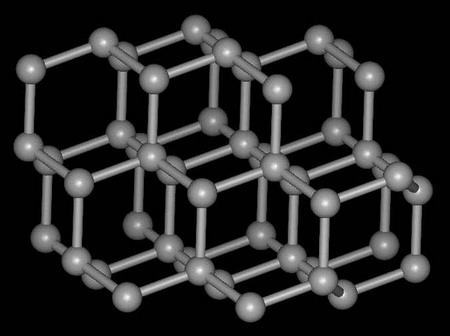
Graphite is a crystalline form of carbon with a distinctive layered atomic structure. Renowned for its exceptional thermal conductivity, electrical conductivity, natural self-lubrication, and high-temperature resistance, it serves as a critical industrial material across modern thermal engineering, semiconductor manufacturing, and precision machining.
Natural vs. Artificial Graphite: Key Differences
Industrial graphite is broadly categorized into Natural Graphite and Artificial (Synthetic) Graphite. Understanding their differences is essential for selecting the right material for your specific operational requirements.
1. Natural Graphite
Mined directly from geological deposits, natural graphite is primarily divided into flake graphite and amorphous graphite.
-
Pros: Cost-effective and readily available.
-
Common Uses: Lubricating coatings, refractory fillers, graphite powder, basic battery anodes, and sealing gaskets.
-
Limitation: Poor grain consistency and controllable purity. It cannot reliably meet the stringent cleanliness and precision standards required in high-temperature cleanroom processes.
2. Artificial (Synthetic) Graphite
Manufactured from high-purity carbon raw materials (such as petroleum coke and pitch coke) through a rigorous multi-step process—including batching, molding, baking, impregnation, and graphitization.
-
Pros: Material properties can be directionally controlled. Purity, density, and grain structure can be custom-designed on demand.
-
Common Uses: High-end thermal engineering, semiconductor hot zones, precision EDM electrodes, and metallurgical components.
Molded Graphite vs. Isostatic Graphite
At Benecustcep, we specialize in two primary types of high-performance artificial graphite engineered for demanding industrial environments:
| Feature | Molded Graphite | Isostatic Graphite |
| Structure | Large plate dimensions, stable structure | Fine grain size, ultra-uniform density |
| Machining | Good for standard structural shapes | Superior dimensional stability; no edge chipping |
| Purity Options | Standard industrial purity | Ultra-high purity (Ash content ≤ 20ppm) |
| Primary Uses | Vacuum furnace linings, heat insulation baffles | EDM electrodes, semiconductor hot zone parts, electrolytic plates |
| Cost Advantage | Highly cost-effective for large components | Premium performance for deep precision processing |
Critical Operating Insight: High-Temperature Oxidation
While graphite excels in extreme heat, it possesses one key vulnerability: it begins to oxidize in air at temperatures above 600°C.
Pro Tip for Furnace Operators: High-temperature applications must always be supported by an inert gas (such as Argon or Nitrogen), a reducing atmosphere, or a vacuum environment.
Using low-quality or improper graphite grades can result in delamination, thermal warping, dusting, and unwanted outgassing—leading to premature workpiece scrap and costly equipment downtime.
Top 5 Industrial Applications of Artificial Graphite
1. Vacuum Furnace Insulation & Lining Components
Thanks to controllable thermal conductivity and outstanding thermal shock resistance, artificial graphite maintains structural integrity under vacuum or protective atmospheres without warping. As a furnace lining, it effectively blocks thermal radiation and protects the furnace body.
2. EDM Graphite Electrodes
Graphite offers stable electrical conductivity, low discharge wear, and exceptional machinability. Compared to traditional copper electrodes, graphite allows faster cutting speeds, resists deformation under heat, and enables intricate micro-engraving for precision mold making.
3. Semiconductor Hot Zone Components
High-purity isostatic graphite (ash content ≤ 20ppm) features extremely low outgassing and precise thermal uniformity. It prevents wafer contamination during long-cycle, ultra-clean silicon crystal growth and processing.
4. Corrosion-Resistant Electrolytic Plates
Graphite resists aggressive acid and alkali environments. Its minimal dimensional variation and uniform conductivity in high-temperature liquid electrolytes ensure continuous and stable electrochemical operation.
5. Custom Machined Parts, Heating Elements & Crucibles
With balanced thermal distribution and high mechanical strength, graphite can be custom-machined into heating rods, sintering boats, and crucibles tailored to specific heat treatment, melting, and sintering setups.
Frequently Asked Questions (FAQ)
Q1: How do I choose between natural and artificial graphite?
For general lubrication, anti-friction fillers, and lower-cost applications, natural graphite is the ideal choice. However, for precision industrial processes requiring high purity, tight dimensional tolerances, and high-temperature consistency, artificial graphite should always be prioritized.
Q2: Why is graphite preferred for vacuum furnaces?
Artificial graphite boasts high thermal shock resistance and controllable heat transfer. Because a vacuum environment eliminates the risk of oxygen exposure, graphite can operate reliably at extreme temperatures for extended periods without degradation.
Q3: What is the main advantage of isostatic graphite over molded graphite?
Isostatic graphite features much finer grain sizes and isotropic density (uniform in all directions). This prevents chipping during complex CNC machining. Additionally, ultra-pure versions have lower high-temperature outgassing, making them ideal for semiconductor applications. Molded graphite excels in large-format structural insulation where cost efficiency is paramount.
Q4: Does graphite always burn or oxidize at high temperatures?
Graphite will oxidize and gradually burn away in an oxygen-rich atmosphere above 600°C. However, in protective atmospheres (Vacuum, Nitrogen, or Argon), graphite remains exceptionally stable even at temperatures exceeding 2,000°C.
Need Custom Graphite Solutions for Your Facility?
Looking for custom graphite plates, high-purity rods, or precision CNC-machined components tailored to your thermal or chemical processes?
[Contact the Benecustcep Technical Team Today] for expert material selection advice, drawing consultations, and rapid custom quotes.